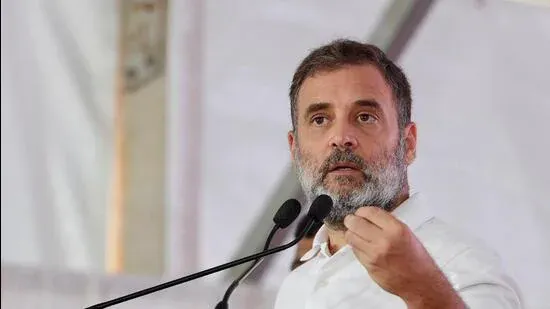
In a sharp assertion of his constitutional role, Rahul Gandhi, recently appointed Leader of the Opposition in the Lok Sabha, has emphasized his right to speak freely in Parliament. The Congress leader’s comments come amid heightened tensions in the House, following repeated interruptions and protests from the treasury benches. Gandhi’s remarks underscore a broader debate over parliamentary decorum, the functioning of democratic institutions, and the opposition’s role in shaping national discourse. His stance reflects a renewed political vigor aimed at holding the government accountable while reaffirming the importance of dissent in a functioning democracy.
A Resurgent Voice in Parliament
Rahul Gandhi’s statement, “I am the Leader of the Opposition and I have the right to speak,” marks a pivotal moment in the evolving dynamics of India’s 18th Lok Sabha. This is the first time in a decade that the post of Leader of the Opposition has been formally filled, following the Congress party’s significant performance in the 2024 general elections. Gandhi’s elevation to the role not only formalizes his status but also signals a more robust and organized opposition.
His declaration, made during a contentious parliamentary session, highlights the challenges of preserving space for dissent and dialogue in the House. Repeated interruptions during his speech prompted Gandhi to remind fellow lawmakers of the constitutional mandate bestowed upon the Leader of the Opposition—a position crucial for ensuring checks and balances within a parliamentary democracy.
Constitutional Role and the Politics of Dissent
The Leader of the Opposition is not merely a ceremonial figure but an institutional safeguard designed to ensure that the views of the minority are heard. Gandhi’s pointed reference to his “right to speak” echoes a broader demand for fair parliamentary procedure and mutual respect among legislators.
Amidst a charged political environment, his intervention comes at a time when debates over national security, social harmony, and economic strategy are occupying center stage. His recent addresses have focused on issues ranging from internal violence and constitutional erosion to the economic disparity facing millions of Indians—topics the opposition sees as central to the country’s future.
Disruption, Accountability, and Parliamentary Decorum
The tone of recent Lok Sabha sessions has been increasingly confrontational. The opposition’s criticism of the government’s handling of sensitive issues—such as the situation in Manipur and rising unemployment—has often been met with vocal rebuttals and procedural delays.
Gandhi’s insistence on decorum and the right to uninterrupted speech resonates with growing public concerns over the state of India’s legislative discourse. The role of Parliament, many argue, is not to silence opposing voices but to engage in meaningful debate. By vocalizing this right, Gandhi is not only defending his own voice but that of millions who voted for the opposition.
Strategic Implications for the Congress Party
Gandhi’s increasingly assertive posture in the Lok Sabha also signals a strategic shift within the Congress party. After years of electoral setbacks, the party appears to be consolidating its position through more visible and pointed leadership in Parliament. This parliamentary momentum, if sustained, could translate into broader electoral traction as the party positions itself as a viable alternative ahead of key state elections.
In this context, Gandhi’s defense of his constitutional role is more than a personal stance—it is part of a larger political recalibration aimed at revitalizing India’s opposition ecosystem.
Conclusion: A Battle for Democratic Balance
Rahul Gandhi’s forceful assertion of his right to speak reflects a larger struggle within Indian democracy—a struggle for space, representation, and accountability. In a Parliament often marred by partisan clashes, his stance serves as a reminder of the importance of institutional norms and democratic dialogue.
Whether this signals a new chapter for parliamentary opposition or merely a moment of rhetorical clarity remains to be seen. What is clear, however, is that the role of dissent—and the right to speak—has found a renewed voice in the Leader of the Opposition.
Comments