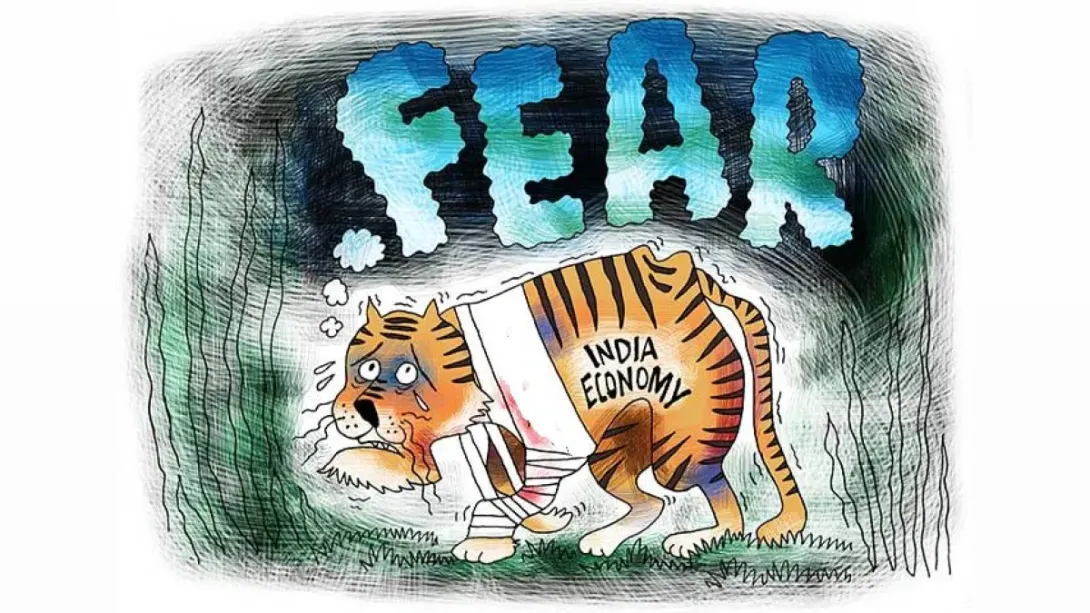
In a carefully calibrated policy communication, the Reserve Bank of India (RBI) has chosen to retain its GDP growth forecast for FY26 while revising its inflation projection downward. The move underscores the central bank’s confidence in the resilience of India’s domestic economy, even as global headwinds persist. The lowered inflation outlook is driven by easing food prices and favorable base effects, while the steady growth projection reflects robust consumption, investment momentum, and a strong services sector. The announcement signals policy continuity with a focus on price stability and sustainable expansion, offering a reassuring message to markets and businesses alike.
Steady Growth Amid Global Headwinds
The RBI has reiterated its real GDP growth projection for FY26 at 7.0%, underscoring the strength of domestic economic fundamentals. Governor Shaktikanta Das noted that the Indian economy continues to benefit from healthy urban consumption, resilient rural demand, and improved capacity utilization across sectors.
Private investment, driven by increased capital expenditure and improved credit flow to industry, remains a key growth engine. The services sector, particularly financial, real estate, and professional services, continues to outperform, supported by digital adoption and rising consumer demand.
While acknowledging external risks—such as volatile crude oil prices, sluggish global trade, and geopolitical tensions—the central bank expressed confidence in India’s ability to maintain macroeconomic stability.
Inflation Forecast Revised Downward
In a notable shift, the RBI has reduced its retail inflation forecast for FY26 to 4.8%, compared to its earlier estimate of 5.2%. The central bank attributed this downward revision to easing food inflation, moderation in fuel prices, and stable core inflation trends.
Food prices, especially vegetables and pulses, have begun to cool following better monsoon predictions and improved supply-side management. While short-term price volatility may persist, especially in perishables, the RBI believes that risks to the inflation trajectory have moderated.
The central bank emphasized its commitment to anchoring inflation expectations and ensuring that price stability remains the cornerstone of its monetary policy.
Policy Stance: Vigilant but Balanced
The Monetary Policy Committee (MPC) retained its “withdrawal of accommodation” stance, highlighting its cautious approach to liquidity and rate management. By maintaining this position, the RBI seeks to ensure that inflation remains under control without derailing the recovery momentum.
Although the repo rate was left unchanged at 6.50%, analysts interpret the language of the policy as leaning slightly dovish, owing to the inflation downgrade. However, any expectations of an imminent rate cut were tempered by the RBI’s emphasis on external risks and the need to stay data-dependent.
The central bank reaffirmed that its decisions would continue to be guided by evolving macroeconomic indicators and the overarching objective of financial stability.
Market and Industry Reaction
The policy announcement was received positively by markets. Bond yields eased slightly in response to the lower inflation forecast, while equity benchmarks remained steady, buoyed by the RBI’s confidence in growth. Banking and FMCG stocks saw moderate gains, reflecting expectations of stable interest rates and improving consumer demand.
Industry leaders welcomed the RBI’s balanced approach. Many hailed the inflation revision as a sign of maturing price stability, while the steady growth outlook bolstered confidence in continued business expansion, especially in infrastructure, manufacturing, and consumer services.
Implications for Credit and Investment Cycles
With inflation easing and growth holding steady, conditions may become increasingly favorable for a gradual revival in private investment and consumer credit. Lower inflation enhances purchasing power, while steady policy rates create a predictable borrowing environment.
Lenders are expected to continue focusing on retail and SME segments, while corporates may step up capital expenditure plans, supported by robust demand forecasts and policy certainty.
The RBI’s message also aligns with broader fiscal policies aimed at infrastructure development, rural upliftment, and digital inclusion—creating a synchronized policy environment that supports long-term economic resilience.
Conclusion
The RBI’s latest policy signals strategic steadiness amid uncertainty. By maintaining its growth forecast and easing the inflation outlook, the central bank is communicating optimism without complacency. With global economies grappling with volatility and fragmentation, India’s central bank appears committed to steering the economy with prudence and purpose. This calibrated approach may offer both markets and the broader economy the stability needed to plan, invest, and grow with confidence in the months ahead.
Comments