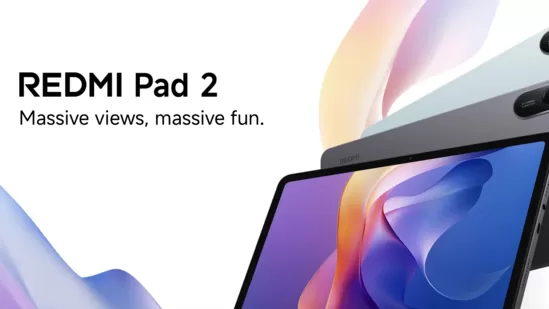
Xiaomi is gearing up to launch the Redmi Pad 2 in India on June 18, after unveiling it in the Philippines. The tablet is packed with significant upgrades over its predecessor, particularly in terms of performance, display, and battery. Powered by the MediaTek Helio G100 Ultra chipset, a larger 2.5K LCD display, quad speakers with Dolby Atmos, and a substantial 9,000mAh battery, the Redmi Pad 2 aims to capture the budget-conscious market. With two storage options, this tablet promises to deliver a high-quality experience without breaking the bank. Here's a deep dive into the tablet’s specs, pricing, and expected features.
Pricing and Availability
The Redmi Pad 2 will be available in India starting June 18, following its initial release in the Philippines. The tablet will come in two primary variants:
- 6GB RAM + 128GB storage priced at PHP 10,499 (~Rs 16,200)
- 8GB RAM + 256GB storage priced at PHP 12,999 (~Rs 19,300)
Xiaomi offers the tablet in three distinct color options: grey, light blue, and silver. This pricing places the Redmi Pad 2 as an entry-level tablet that still delivers powerful features, making it an attractive choice for users who prioritize value for money. The upcoming launch in India is expected to generate significant interest given the competitive pricing and robust feature set.
Display and Performance Upgrades
One of the most notable improvements in the Redmi Pad 2 is its 11-inch LCD screen, offering a 2560 x 1600 resolution with a 90Hz refresh rate. The increased screen size and higher resolution enhance the visual experience, especially for media consumption, gaming, and general use. The display is also brighter, with a peak brightness of 600 nits, making it more vibrant and legible even under direct sunlight.
In comparison, the original Redmi Pad featured a 10.61-inch display with a lower resolution. These upgrades should significantly improve viewing comfort, making the Redmi Pad 2 a more compelling option for users seeking a larger, sharper screen without upgrading to higher-end tablets.
Under the hood, the Redmi Pad 2 is powered by the MediaTek Helio G100 Ultra chipset, a substantial upgrade from the Helio G99 found in the original. This newer processor is designed to deliver enhanced performance, especially in multitasking and casual gaming scenarios. The added 8GB of LPDDR4X RAM ensures smooth performance, while 256GB of UFS 2.2 storage offers fast data access, with the option to expand storage via microSD.
Audio and Battery Life
The Redmi Pad 2 retains one of the standout features from the original model: its quad speakers with Dolby Atmos support, which deliver superior sound quality, particularly for watching movies or listening to music. A welcome addition in this iteration is the 3.5mm headphone jack, which was missing in the first-gen model and had received criticism from users. This change addresses one of the main user concerns and makes the tablet more versatile for audio lovers.
Battery life also sees a significant boost with the inclusion of a 9,000mAh battery, offering longer usage times for video streaming, gaming, and productivity tasks. The tablet supports 18W fast charging, ensuring quicker recharges, although it’s likely that a 22.5W charger will be bundled in the box, similar to the first generation. This larger battery will allow users to rely on the device for extended periods, making it a perfect fit for long commutes or workdays.
Camera and Software Features
While the Redmi Pad 2 offers a solid camera experience for an entry-level tablet, it makes a small compromise in the camera department. The front camera has been downgraded from 8 megapixels on the original model to 5 megapixels. However, the rear camera remains unchanged at 8 megapixels, providing decent photo quality for a tablet in this price range. The camera system will likely cater to video calls and basic photography needs rather than high-end image capturing.
The device runs on Android 15, coupled with HyperOS 2.0, marking a significant jump from the original model’s MIUI 13 based on Android 12. This updated software promises a smoother and more intuitive user experience with additional customization options. Xiaomi’s HyperOS 2.0 will bring new features to enhance performance and make it easier for users to optimize their devices.
Connectivity and Additional Features
Connectivity options for the Redmi Pad 2 include Wi-Fi, 4G LTE, Bluetooth, and USB-C. The inclusion of Face Unlock is also a notable feature, adding an extra layer of security and convenience. These features make the Redmi Pad 2 a highly capable device for both work and play, ensuring users stay connected and productive throughout the day.
Conclusion: A Strong Contender in the Budget Tablet Market
With its impressive specs and competitive pricing, the Redmi Pad 2 has all the ingredients to disrupt the budget tablet market. The larger 2.5K LCD display, upgraded MediaTek Helio G100 Ultra processor, Dolby Atmos speakers, and substantial battery life elevate the device far beyond its entry-level pricing. Xiaomi has taken note of user feedback from the original Redmi Pad and has made key upgrades to meet the needs of modern users. The addition of Android 15 and HyperOS 2.0 ensures that the tablet will deliver a contemporary, feature-rich software experience, making it a strong contender for consumers seeking value-driven alternatives to high-end tablets.
As the Redmi Pad 2 is set to launch in India next month, it will be interesting to see how it stacks up against its competitors in the budget tablet segment. For users looking for an affordable yet powerful tablet, the Redmi Pad 2 might just be the perfect device to consider.
Comments