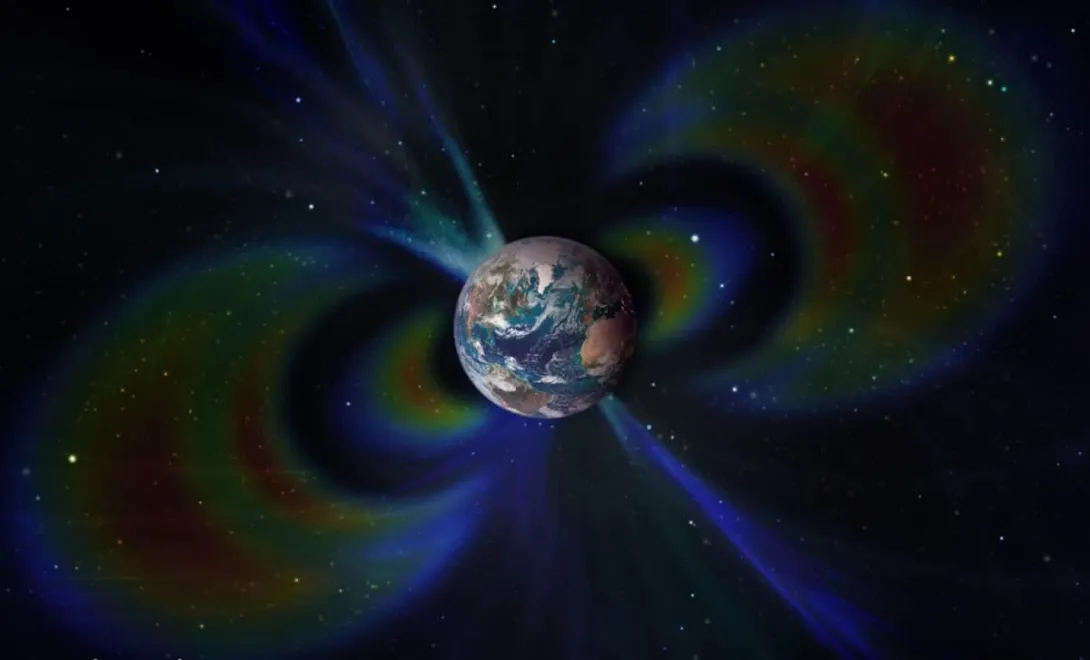
In a startling revelation, scientists have detected a rapidly expanding tear in Earth’s magnetic field — the invisible shield that protects the planet from harmful solar radiation. This growing anomaly has raised alarms among researchers, who warn that it could have far-reaching effects on satellites, communication networks, and even power grids. The phenomenon, described as a “magnetic gap,” allows streams of charged solar particles to penetrate Earth’s upper atmosphere with increasing intensity. As solar activity continues to surge, experts are racing to understand the implications of this expanding rift and its potential impact on global systems.
---
The Role of Earth’s Magnetic Field
Earth’s magnetic field acts as a crucial line of defense, deflecting the solar wind — a continuous stream of charged particles emitted by the Sun. Without this natural shield, the planet would be exposed to intense radiation capable of stripping away the atmosphere and endangering life. Generated by the movement of molten iron within Earth’s outer core, the magnetic field is dynamic, constantly shifting and fluctuating over time.
However, in recent decades, scientists have observed irregularities and weakening regions within this field. These disturbances have become more pronounced as solar activity intensifies, leading to phenomena such as geomagnetic storms and auroras appearing at lower latitudes than usual.
---
The Expanding Magnetic Rift
The latest data, gathered from satellites and space observatories, reveals that a massive tear has formed in the magnetosphere — a temporary opening that allows solar radiation to seep in. This gap, which periodically opens and widens, appears to be growing in both size and frequency. Researchers attribute this anomaly to complex interactions between solar magnetic fields and Earth’s own geomagnetic forces.
During periods of heightened solar activity, such as solar flares or coronal mass ejections (CMEs), these breaches become more active. As a result, an increased volume of high-energy particles is able to enter the planet’s near-space environment, disrupting satellite operations and potentially causing electrical surges in power infrastructure.
---
Potential Threats to Technology and Life
The implications of an expanding magnetic hole are wide-ranging. Satellite systems — including those used for GPS navigation, communication, and weather forecasting — are particularly vulnerable to electromagnetic interference. High-altitude flights and astronauts aboard the International Space Station (ISS) could also face elevated radiation exposure.
On the ground, the consequences may extend to large-scale electrical systems. Past geomagnetic disturbances, such as the 1989 Quebec blackout, have demonstrated how solar storms can induce powerful currents that damage transformers and disrupt energy distribution. Experts caution that if the magnetic field continues to weaken or tear, such incidents could become more frequent and severe.
---
Scientists Race to Understand the Cause
While magnetic anomalies are not new, the current situation is notable for its speed and intensity. Ongoing research suggests that the phenomenon may be linked to the South Atlantic Anomaly — a region between South America and Africa where Earth’s magnetic field is unusually weak. Some studies indicate that the planet may even be undergoing a magnetic “reversal,” a slow and natural process where the north and south magnetic poles switch places.
Scientists are now employing advanced satellite mapping and computer simulations to study how and why these breaches form. Understanding the connection between solar activity cycles and geomagnetic fluctuations could prove vital in predicting future disruptions.
---
Preparing for a More Volatile Space Environment
Given the growing risk, global space agencies and power authorities are working together to strengthen preparedness. Improved satellite shielding, early warning systems for geomagnetic storms, and better forecasting models are being prioritized. The goal is to minimize potential disruptions to essential technologies as the Sun approaches its next solar maximum — the peak of its 11-year activity cycle.
Governments and private industries are also being urged to invest in “space weather resilience,” ensuring that telecommunications, aviation, and energy infrastructure can withstand the effects of increased solar radiation.
---
A Fragile Balance Between Earth and the Sun
The discovery of an expanding magnetic tear serves as a stark reminder of the planet’s delicate relationship with the Sun. While the magnetic field has long protected Earth from cosmic hazards, it is neither permanent nor invincible. As the forces shaping our planet’s magnetic shield continue to evolve, the scientific community remains on high alert — monitoring, modeling, and preparing for a future where the boundary between Earth and space becomes increasingly porous.
Humanity’s challenge lies not only in understanding these cosmic phenomena but in ensuring that our technological civilization can endure the storms that come with them.
Comments