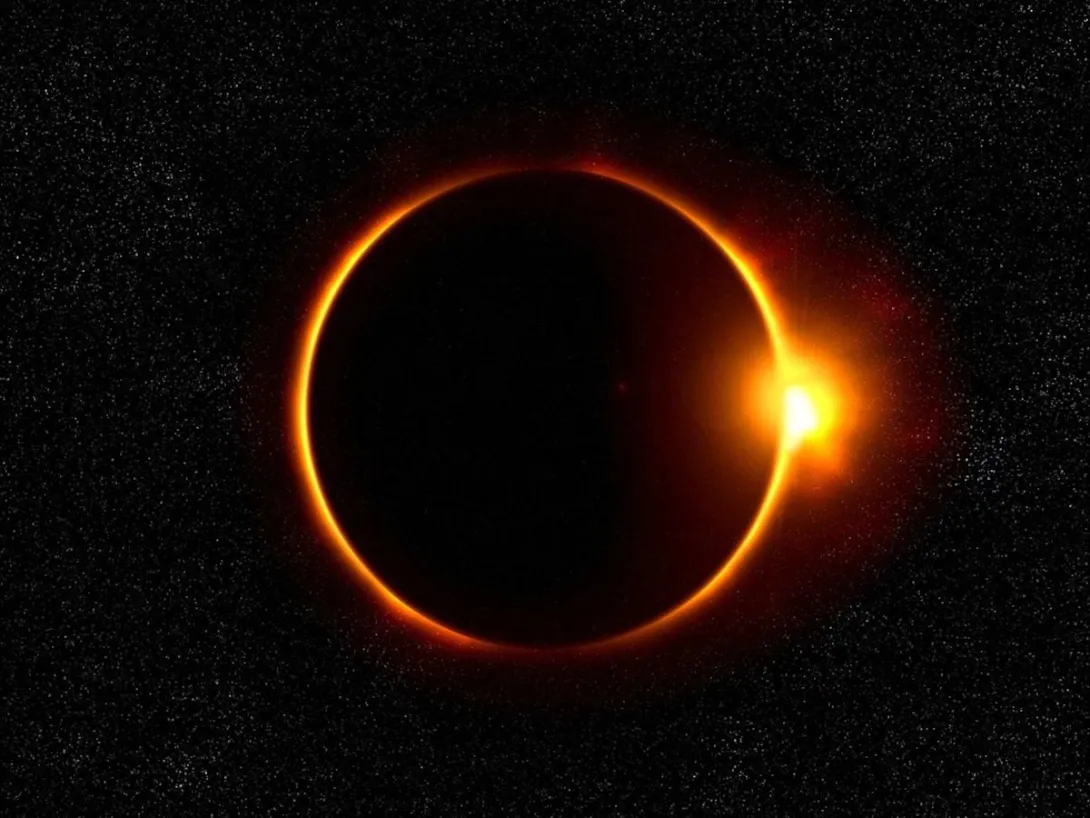
A rare annular solar eclipse, popularly known as the “ring of fire,” is set to occur on February 17, drawing global attention from scientists, astronomers, and sky enthusiasts. The phenomenon will take place when the Moon passes between the Earth and the Sun but remains too distant to fully obscure it, leaving a luminous ring visible around the lunar silhouette. Beyond its visual spectacle, the eclipse offers valuable scientific opportunities to study solar behavior and atmospheric effects. The event also highlights the growing public interest in celestial phenomena, driven by improved forecasting and digital access to astronomy.
Understanding the ‘Ring of Fire’ Eclipse
Unlike a total solar eclipse, an annular eclipse occurs when the Moon appears smaller than the Sun due to its elliptical orbit. As a result, the Sun’s outer edge remains visible, forming a bright circular outline. This striking visual effect has earned the phenomenon its dramatic nickname and makes it one of the most anticipated astronomical events.
Visibility and Timing
The February 17 eclipse will be visible along a specific path across parts of the globe, with partial views available in surrounding regions. Visibility will depend on geographic location and local weather conditions. Astronomical institutions and observatories are expected to provide live streams, expanding access well beyond the eclipse’s physical path.
Scientific and Educational Value
From a research perspective, annular eclipses allow scientists to study changes in solar radiation and atmospheric responses over short periods. For educators and institutions, the event serves as a powerful tool to spark interest in space science, particularly among younger audiences.
Public Engagement and Safety Considerations
Authorities and experts continue to emphasize the importance of proper eye protection while viewing the eclipse. Certified solar filters and eclipse glasses are essential, as direct observation can cause serious eye damage. Public awareness campaigns have become integral to eclipse-related outreach.
A Moment of Cosmic Perspective
As anticipation builds for the February 17 event, the eclipse stands as a reminder of humanity’s enduring fascination with the cosmos. In an era dominated by economic and technological change, such celestial moments offer a rare pause—connecting science, culture, and collective wonder under the same sky.
Comments