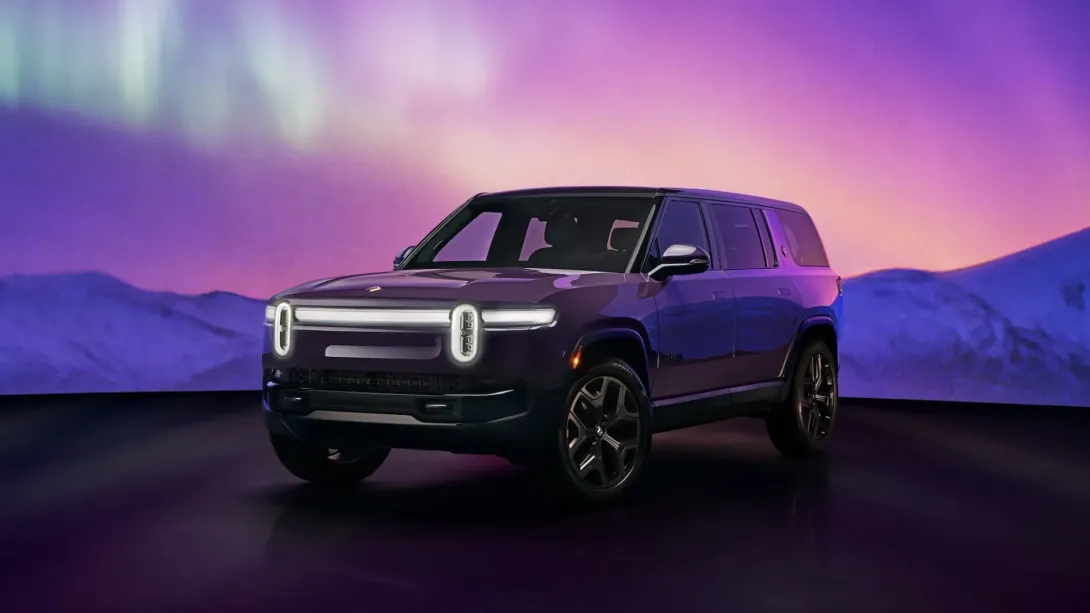
Electric vehicle maker Rivian has announced a new artificial intelligence–driven technology aimed at advancing its autonomous driving capabilities, signaling a sharper focus on software-led differentiation. The move reflects the broader shift within the automotive industry, where intelligence, data, and computing power are becoming as critical as hardware engineering. Rivian’s latest development is designed to improve vehicle perception, decision-making, and real-time responsiveness, laying the groundwork for more advanced driver-assistance and self-driving features. For investors and industry observers, the announcement highlights Rivian’s intent to compete not only on electric mobility but also on next-generation automotive intelligence.
A Strategic Push Into Automotive AI
Rivian’s announcement underscores the company’s belief that artificial intelligence will define the future of mobility. By developing proprietary AI systems, the automaker aims to reduce reliance on third-party software while gaining tighter control over performance, safety, and long-term innovation.
Industry analysts note that this strategy mirrors a broader trend among electric vehicle manufacturers seeking to vertically integrate software and hardware. Control over AI stacks is increasingly viewed as a competitive advantage in a market where differentiation through range and design alone is narrowing.
Enhancing Autonomous and Driver-Assist Capabilities
The newly announced AI technology is expected to enhance Rivian’s autonomous driving roadmap by improving how vehicles interpret surroundings and respond to complex traffic scenarios. Advanced machine learning models are designed to process large volumes of sensor data, enabling smoother navigation, better object detection, and more adaptive driving behavior.
While Rivian has not positioned the system as fully autonomous in the near term, the technology is intended to strengthen advanced driver-assistance systems and support incremental deployment of self-driving features through software updates.
Software as a Long-Term Value Driver
For Rivian, software and AI are increasingly central to its long-term business model. Unlike traditional automakers, electric vehicle companies can deliver continuous improvements through over-the-air updates, extending product life cycles and enhancing customer experience without physical modifications.
Investors view this approach as critical to improving margins over time, as software-led features can generate recurring value while reducing dependence on costly hardware upgrades.
Competitive Landscape and Industry Context
Rivian’s AI announcement comes amid intensifying competition in autonomous driving, with both established automakers and technology firms investing heavily in similar capabilities. As regulatory scrutiny around self-driving systems increases, companies are under pressure to demonstrate not only innovation but also safety, reliability, and transparency.
Analysts suggest that Rivian’s emphasis on in-house AI development may help it adapt more quickly to regulatory and technological shifts compared with manufacturers reliant on external platforms.
Implications for Rivian’s Market Position
The move strengthens Rivian’s positioning as a technology-driven automaker rather than a conventional vehicle manufacturer. While near-term financial performance remains closely watched, particularly around production scale and cash management, strategic investments in AI signal a focus on long-term differentiation.
Market participants note that credibility in autonomous technology could enhance Rivian’s brand equity and support future partnerships or commercial opportunities.
Outlook
Rivian’s new AI initiative reflects the accelerating convergence of mobility, software, and artificial intelligence. While fully autonomous driving remains a long-term goal for the industry, incremental advancements are shaping consumer expectations today. For Rivian, the challenge will be translating technical ambition into reliable, real-world performance. If executed effectively, its AI-driven approach could become a key pillar of competitiveness in an increasingly crowded electric vehicle market.
Comments