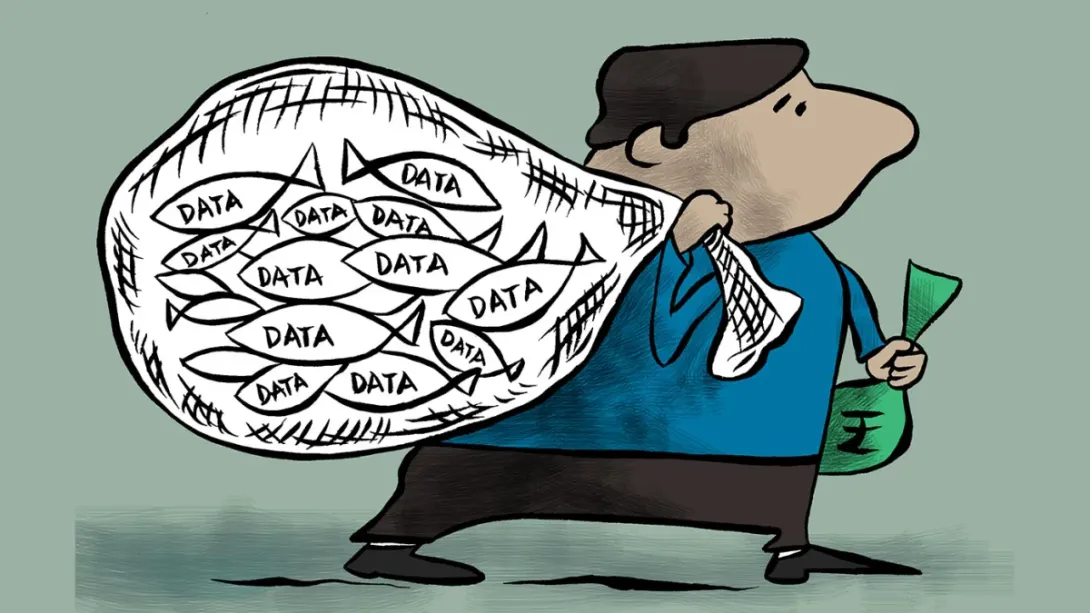
India stands at a crossroads where two fundamental principles—citizens’ right to information and the safeguarding of personal data—intersect. The Right to Information (RTI) Act, hailed as a landmark in democratic accountability, empowers citizens to demand transparency in governance. Simultaneously, the increasing digitalization of state and private systems has heightened concerns over personal privacy, compelling lawmakers to advance stronger data protection frameworks. This tension has sparked debate: how can the state reconcile the public’s right to know with the individual’s right to be forgotten? Striking this balance will define India’s governance model in an era shaped by digital transformation.
Transparency in Governance: The RTI Legacy
Enacted in 2005, the Right to Information Act has been instrumental in exposing corruption, improving bureaucratic accountability, and strengthening citizen engagement. By allowing access to government records, the Act embodies the principle that information is power in a democracy.
Civil society groups and investigative journalists have used RTI as a critical tool to uncover irregularities in public spending, policy implementation, and procurement processes. Its success lies in reinforcing transparency as a cornerstone of governance.
However, the same openness that empowers citizens has increasingly collided with the right to privacy, particularly in a world where personal data circulates across digital platforms at unprecedented scale.
Rise of Data Protection as a Legal Imperative
The digital economy, characterized by rapid data collection, storage, and sharing, has amplified the urgency of protecting personal information. Financial transactions, healthcare records, and government databases now hold sensitive details that, if disclosed, can endanger individuals.
India’s forthcoming data protection laws—mirroring global standards such as the European Union’s GDPR—seek to regulate how personal information is processed, shared, and stored. These measures are not only about safeguarding privacy but also about building public trust in digital ecosystems critical to economic growth.
Yet, as data protection laws expand, they risk clashing with the RTI Act’s mandate of public disclosure.
The Conflict: Right to Know vs. Right to Privacy
At the heart of the debate lies a fundamental legal and ethical dilemma: when does the citizen’s right to know end, and the individual’s right to privacy begin?
Instances have emerged where RTI requests have inadvertently sought access to personal data—salary details, medical records, or identity-linked information—that falls within the realm of privacy. While transparency demands openness in public spending and decision-making, it must not erode the confidentiality of individuals, especially government employees or beneficiaries of welfare schemes.
The challenge, therefore, is to craft a regulatory framework that ensures accountability without infringing on personal dignity.
Judicial Perspectives and Policy Considerations
India’s judiciary has played a pivotal role in shaping the balance between transparency and privacy. In the landmark Puttaswamy v. Union of India judgment (2017), the Supreme Court recognized privacy as a fundamental right under the Constitution. This recognition has since influenced the interpretation of RTI requests, with public authorities increasingly required to withhold personal information unless it serves a larger public interest.
Policymakers now face the task of harmonizing RTI provisions with emerging data protection laws, ensuring that neither principle undermines the other. Clearer guidelines on exemptions, data anonymization, and proportional disclosure may provide the way forward.
Toward a Balanced Framework
The path ahead demands nuanced solutions. Introducing stricter safeguards within the RTI process, such as screening requests that involve personal data, could reduce misuse. Simultaneously, data protection regulations must carve out space for legitimate public interest disclosures, ensuring that transparency in governance is not compromised.
Educational campaigns highlighting both citizens’ rights and responsibilities will be crucial in fostering a culture of informed use rather than indiscriminate demand for information.
Ultimately, the equilibrium between transparency and privacy will define the credibility of India’s democratic institutions in the digital age.
Conclusion
The RTI Act and data protection laws represent two sides of the same coin: one empowers citizens by dismantling secrecy in governance, while the other safeguards individuals against the misuse of personal data. India’s challenge lies not in choosing one over the other, but in harmonizing them to build a governance model rooted in both openness and respect for individual rights.
As the nation navigates this delicate balance, it has the opportunity to create a framework that upholds democratic accountability while safeguarding personal dignity in an increasingly digital society.
Comments