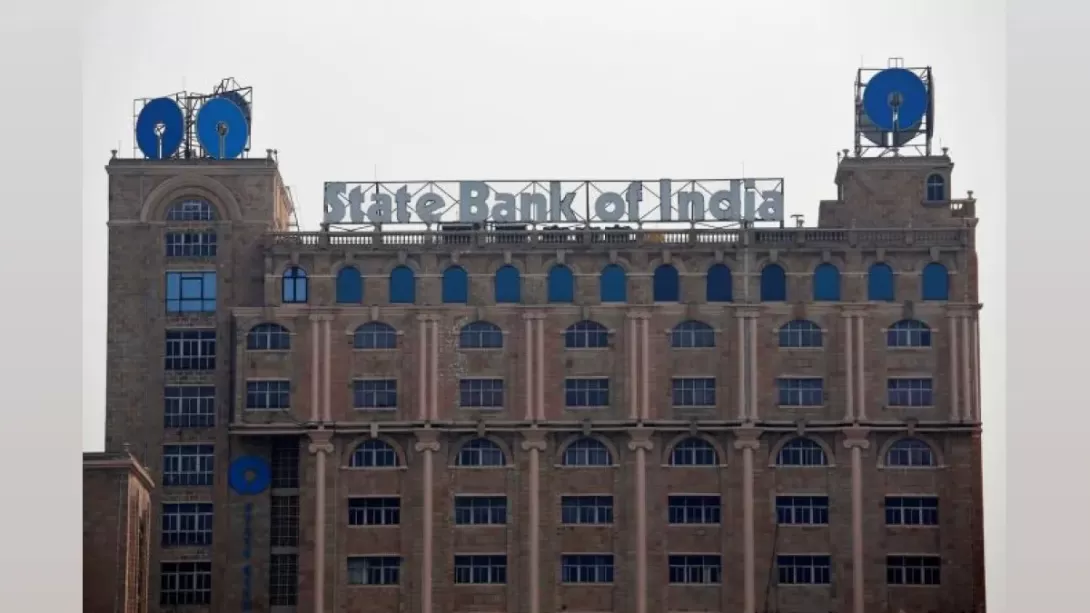
In a decisive response to the Reserve Bank of India’s (RBI) latest policy rate cut, the State Bank of India (SBI), the country’s largest lender, has reduced its key lending and deposit rates across the board. Effective June 15, 2025, the bank lowered its Repo Linked Lending Rate (RLLR) by 50 basis points to 7.75%, alongside a similar cut in its External Benchmark-Based Lending Rate (EBLR) to 8.15%. Fixed deposit rates were also trimmed by 25 basis points across all maturities. The move is expected to stimulate credit growth and consumer spending amid a broader monetary easing cycle.
SBI Acts Swiftly After RBI's Aggressive Monetary Easing
The State Bank of India has acted promptly on the heels of the Reserve Bank of India’s unexpected 50 basis point rate cut, lowering both its Repo Linked Lending Rate (RLLR) and External Benchmark-Based Lending Rate (EBLR). These revisions bring the RLLR down to 7.75% and the EBLR to 8.15%, making borrowing cheaper for millions of retail and corporate customers. The changes take effect from June 15, 2025.
This development follows the RBI’s June 6 monetary policy announcement, in which the central bank slashed the repo rate by 50 basis points to 5.5%. The move, aimed at bolstering economic activity amid slowing growth, also included a 100 basis point cut in the Cash Reserve Ratio (CRR), which now stands at 3%. This adjustment alone is expected to inject approximately Rs. 2.5 lakh crore into the banking system by year-end, increasing available liquidity.
Lending Rate Reductions to Support Borrowers and Growth
SBI’s revision of the RLLR and EBLR is part of a broader trend, as most banks have begun to align their lending rates with the RBI’s policy shift. The decision is expected to support new credit demand across personal, housing, and business loan segments. It also offers a welcome relief to existing borrowers whose loans are pegged to external benchmarks.
Given that India’s GDP growth slipped to a four-year low of 6.5% in FY25, the central bank’s accommodative stance is a clear signal to the financial system to pivot towards growth stimulation. SBI’s timely implementation further ensures that the benefits of the rate cuts are transmitted quickly and efficiently to end consumers.
Deposit Rates Lowered Across All Maturities
While borrowers stand to gain, savers will face lower yields on fixed deposits. SBI has announced a 25 basis point reduction in interest rates for term deposits of up to Rs. 3 crore, applicable from June 15.
The revised rates are as follows:
- 1 to 2 years: reduced to 6.50% from 6.75%
- 2 to less than 3 years: revised to 6.45% from 6.70%
- 3 to 5 years: down to 6.30% from 6.55%
- 5 to 10 years: lowered to 6.05% from 6.30%
- Special 444-day ‘Amrit Vrishti’ deposit scheme: decreased to 6.60% from 6.85%
These revised deposit rates reflect the bank’s need to adjust interest outflows in line with lower lending rates and abundant liquidity conditions.
Preferential Rates for Senior and Super Senior Citizens
To cushion the impact of lower rates on older savers, SBI continues to offer preferential interest rates for senior and super senior citizens. Senior citizens are entitled to an additional 50 basis points over the card rate, while super senior citizens receive an even higher premium of 60 basis points. These measures aim to provide some insulation to pensioners and retirees who depend on fixed income instruments.
Market Outlook and Broader Implications
SBI’s rate cuts not only reaffirm the central bank’s commitment to an accommodative monetary policy but also set the tone for other financial institutions to follow. As the country navigates a challenging economic landscape with subdued growth and global uncertainties, the emphasis has clearly shifted from inflation control to fostering expansion.
In the coming weeks, more banks are expected to adjust their benchmark rates downward, further accelerating credit flow to businesses and households. While depositors may need to recalibrate their investment strategies amid declining returns, the overall policy shift marks a clear pivot toward stimulating demand and reinvigorating economic momentum.
Conclusion
The State Bank of India’s swift transmission of the RBI’s rate cuts underscores its pivotal role in the nation’s financial ecosystem. With reduced borrowing costs and moderate deposit yields, the bank’s recalibrated rate structure seeks to balance the dual priorities of growth promotion and financial stability. As monetary easing continues, the full impact of these measures will unfold across consumption, investment, and savings behavior in the quarters ahead.
Comments