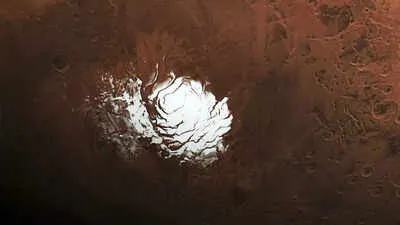
The question of water on Mars has long captivated scientists and space enthusiasts alike. Recent research provides compelling evidence suggesting that liquid water may exist intermittently on the Martian surface, particularly in the form of briny flows or subsurface reservoirs. Advanced satellite imaging and spectroscopy have revealed seasonal streaks, mineral deposits, and potential underground aquifers, challenging earlier assumptions about the planet’s aridity. These findings carry profound implications for understanding Mars’ geology, climate history, and its potential to harbor microbial life. Moreover, they inform future mission planning, including human exploration and the search for extraterrestrial life.
Evidence of Water on Mars
Recent studies indicate that Mars may not be as dry as previously believed. Observations from orbiting satellites have identified recurring slope lineae—dark streaks appearing seasonally on Martian slopes—which suggest transient flows of briny water. Additionally, mineralogical analyses indicate the presence of hydrated salts, further supporting the hypothesis of liquid water in certain regions. While the water is likely highly saline and transient, its presence marks a significant shift in understanding the planet’s hydrological potential.
Subsurface Reservoirs and Hidden Aquifers
Beyond surface evidence, radar investigations have hinted at the existence of substantial subsurface water reservoirs. Data collected from Mars-orbiting probes suggest that some regions may harbor liquid water beneath the frozen crust, insulated by layers of ice and regolith. Such reservoirs could persist despite the planet’s low atmospheric pressure and frigid temperatures, providing potential habitats for microbial life and critical resources for future human missions.
Implications for Life and Exploration
The presence of water, even in limited or briny forms, significantly raises the prospect of life—past or present—on Mars. Microbial organisms could potentially survive in subterranean aquifers or transient surface flows, making these areas prime targets for astrobiology research. Moreover, understanding the distribution and accessibility of water is crucial for planning sustainable human exploration, including in-situ resource utilization for drinking, oxygen production, and fuel generation.
Challenges and Next Steps
Despite promising indicators, confirming liquid water on Mars remains challenging. Harsh environmental conditions, such as extreme cold, low atmospheric pressure, and high radiation, make direct observation and sample collection difficult. Future missions, including rovers and landers equipped with drilling and spectroscopic instruments, aim to validate these findings and analyze water’s chemical composition. This data will not only clarify Mars’ potential habitability but also inform strategies for long-term human settlement.
The evolving picture of Mars suggests a planet that may still host pockets of water, albeit under extreme conditions. These discoveries deepen our understanding of planetary processes and reinforce Mars as a focal point for exploring the broader question of life beyond Earth.
Comments