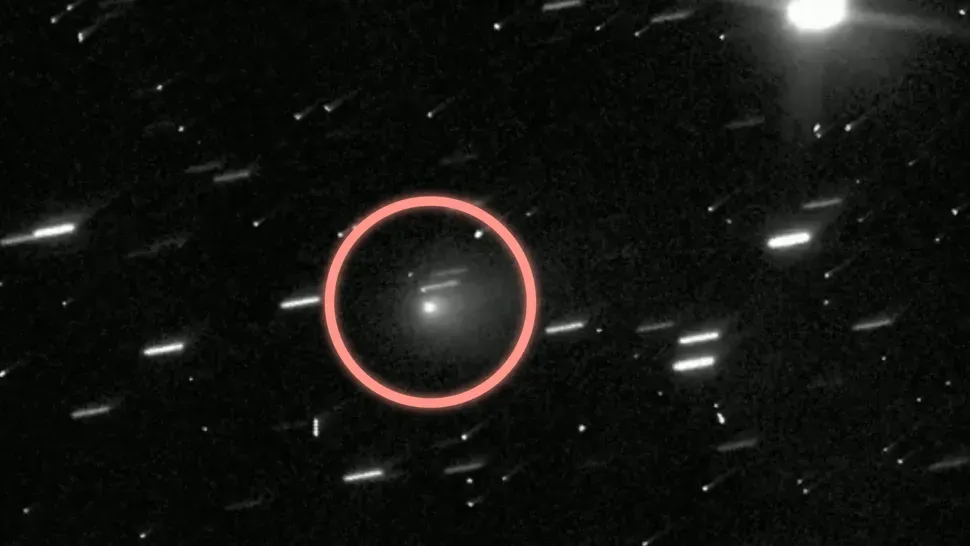
Astronomers are intensively studying 3I/ATLAS, an interstellar comet that has entered the solar system from beyond, offering a rare glimpse into material from another star system. Its unusual trajectory, high velocity, and unique chemical composition distinguish it from native solar system objects. Observations using ground-based telescopes and space observatories aim to analyze its dust, gas, and isotopic ratios, providing critical insights into the formation and evolution of planetary systems outside our own. Researchers believe that 3I/ATLAS can shed light on the diversity of interstellar objects and the processes shaping stellar and planetary environments across the galaxy.
Interstellar Origins
3I/ATLAS, first detected by the Asteroid Terrestrial-impact Last Alert System (ATLAS), exhibits a hyperbolic orbit, confirming its origin outside the solar system. Unlike typical comets, its velocity and trajectory suggest it has traveled across interstellar space for millions of years before entering our neighborhood. This rare visit allows scientists to directly study material formed in a distant stellar environment.
Observational Insights
Astronomers are employing spectroscopy, photometry, and imaging to assess 3I/ATLAS’s composition. Early results indicate unusual ratios of volatile compounds, dust grain structures, and isotopic signatures, offering clues about star formation and planetary disk processes in other systems. The comet’s activity, including its faint coma and subtle tail, provides additional data on the interaction between interstellar material and solar radiation.
Scientific Significance
Studying 3I/ATLAS provides a unique opportunity to compare extra-solar material with native solar system objects. Findings may reveal differences in chemical evolution, dust formation, and ice composition, informing models of planetary system diversity. Such insights are crucial for understanding the broader galaxy’s formation dynamics and the potential for habitable environments elsewhere.
Technological and Collaborative Efforts
International collaboration plays a pivotal role in observing 3I/ATLAS. Ground-based telescopes across continents and space-based observatories are coordinating to maximize observational coverage. Advanced instruments allow high-resolution spectroscopy and real-time data sharing, ensuring comprehensive analysis during the comet’s brief passage through the inner solar system.
Conclusion
The interstellar comet 3I/ATLAS offers an extraordinary window into the cosmos beyond our solar system. Its study enhances understanding of planetary formation, stellar evolution, and interstellar chemistry, bridging gaps in our knowledge of the galaxy’s diversity. As scientists continue to analyze its composition and behavior, 3I/ATLAS stands as a testament to the dynamic and interconnected nature of the universe, inspiring further exploration of objects from distant star systems.
Comments