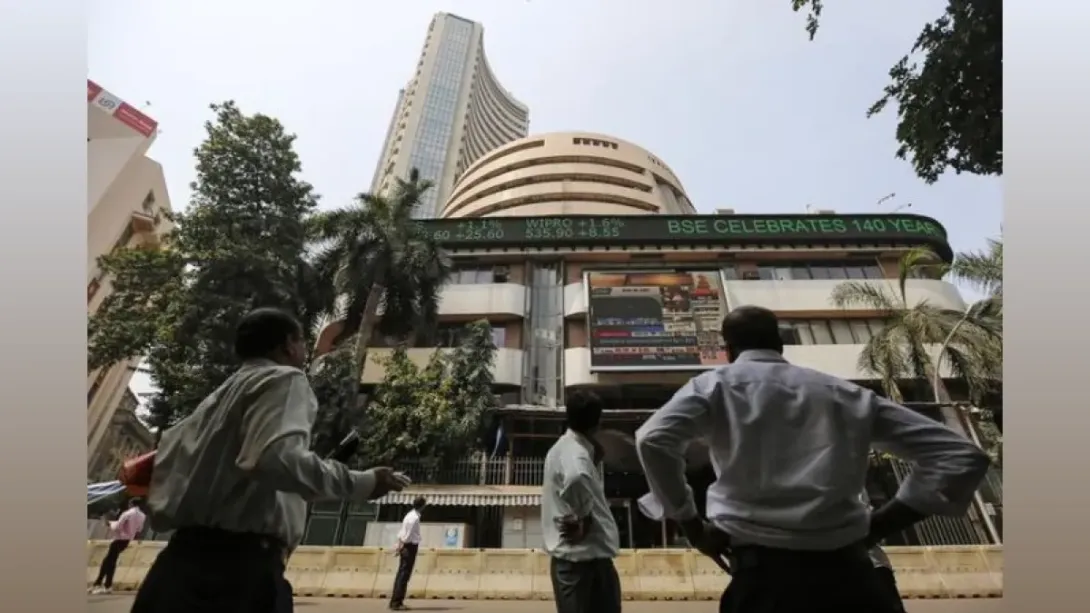
Indian equity markets witnessed a sharp decline on Wednesday as foreign institutional investors (FIIs) continued their selling spree amid weak global sentiment and cautious domestic trading. The Sensex and Nifty closed lower for the third consecutive session, dragged down by losses in banking, IT, and energy stocks. Analysts attributed the fall to persistent foreign fund withdrawals, rising U.S. bond yields, and concerns over global economic growth. Market participants remained wary ahead of key macroeconomic data releases, with volatility expected to continue in the near term.
Markets Extend Losses as FIIs Continue to Exit
Equity benchmarks came under pressure as foreign institutional investors persisted with heavy selling, dampening investor confidence across sectors. The BSE Sensex dropped by more than 300 points, while the NSE Nifty 50 slipped below the 22,000-mark, marking its lowest level in nearly two weeks.
Traders pointed out that the recent trend of foreign fund outflows has intensified due to the strengthening U.S. dollar and higher yields on American treasury bonds, which have made emerging market assets relatively less attractive. In contrast, domestic institutional investors (DIIs) attempted to cushion the fall through selective buying in defensive stocks, though their efforts were insufficient to counter the broader market weakness.
Sectoral Indices Reflect Broad-Based Weakness
Selling pressure was widespread across key sectors. Banking and financial stocks, which carry significant index weight, led the decline as investors booked profits following recent rallies. IT stocks followed suit, weighed down by global demand uncertainty and cautious earnings outlooks from major technology firms.
Energy and infrastructure counters also saw declines amid concerns of slower capital expenditure momentum. Meanwhile, FMCG and pharma stocks were relatively resilient, offering some defensive support to the indices.
“Investors are adopting a risk-off approach, with a noticeable tilt toward safer asset classes,” said a Mumbai-based market strategist. “The sustained selling by FIIs reflects not only profit-taking but also a strategic repositioning toward developed markets.”
Global Sentiment and Macroeconomic Concerns
The weakness in Indian equities mirrored a broader decline across Asian markets, influenced by rising concerns over the global economic slowdown and expectations that major central banks may maintain higher interest rates for an extended period.
U.S. Federal Reserve officials recently signaled a cautious stance on rate cuts, dampening hopes for an early easing cycle. This has kept global investors on edge, particularly in emerging markets, where liquidity-sensitive sectors are more vulnerable to capital flight.
Additionally, geopolitical uncertainties and fluctuations in crude oil prices have added to investor anxiety. With India being a major importer of oil, higher energy prices could exert inflationary pressure and complicate monetary policy decisions by the Reserve Bank of India (RBI).
Rupee Weakness and Domestic Cues Add Pressure
The Indian rupee also weakened against the U.S. dollar, slipping closer to its recent lows as foreign outflows continued. The currency’s depreciation further weighed on investor sentiment, particularly in import-heavy industries such as oil marketing and technology.
Domestically, traders remain watchful ahead of the upcoming industrial production (IIP) and consumer inflation data, which could provide clues about the RBI’s policy outlook. Persistent inflationary pressures or signs of slowing growth could influence investor positioning in the weeks ahead.
Outlook: Volatility Likely to Persist
Market analysts expect volatility to remain elevated in the near term, given the interplay of global uncertainty, foreign fund movements, and domestic macroeconomic factors. The India VIX, a measure of market volatility, has inched higher, indicating rising caution among traders.
“While India’s long-term fundamentals remain strong, short-term headwinds—especially from global markets—could continue to weigh on sentiment,” said an equity strategist at a leading brokerage firm. “Investors should focus on quality stocks with strong balance sheets and consistent earnings visibility.”
Conclusion
The recent slide in Indian equity markets underscores the growing sensitivity of domestic sentiment to global financial flows and macroeconomic signals. As FIIs continue to pull money out of emerging markets, the Indian market faces renewed challenges in sustaining momentum.
With global growth prospects uncertain and monetary policy cycles diverging, investors are advised to maintain a balanced approach—combining caution with strategic long-term positioning. The coming weeks are likely to test both the resilience of Indian markets and the confidence of retail investors amid shifting global tides.
Comments