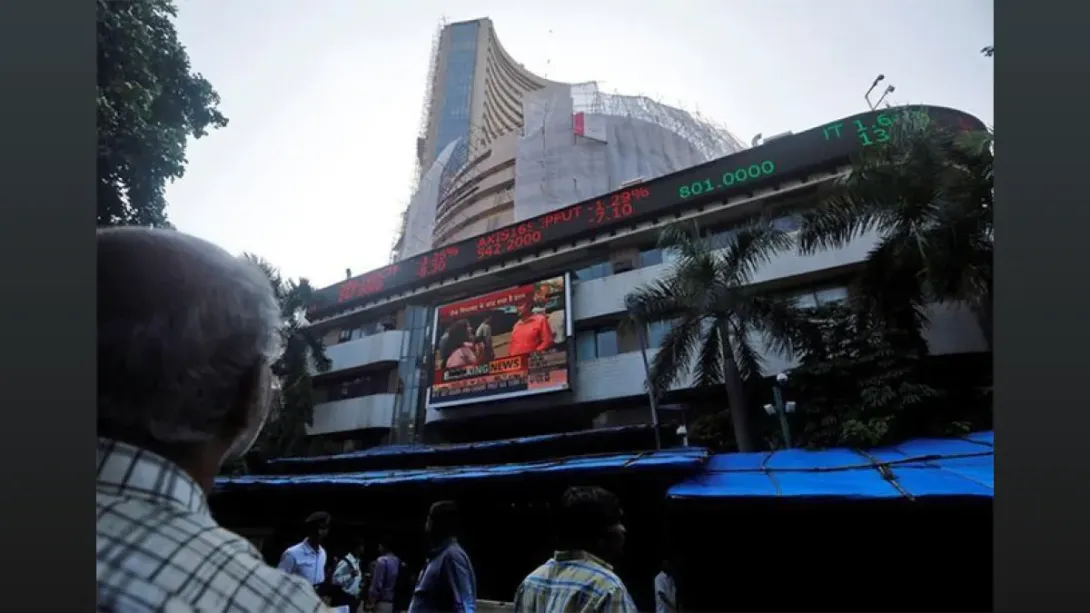
Indian benchmark indices plunged sharply as escalating geopolitical tensions unsettled global financial markets, triggering widespread risk aversion among investors. The BSE Sensex and Nifty 50 recorded steep losses amid heavy selling in banking, energy and information technology stocks. Heightened uncertainty over international conflict, rising crude oil prices and concerns about inflationary pressures intensified the market downturn. Foreign institutional investors accelerated outflows, compounding volatility across large-cap counters. Analysts caution that while India’s domestic fundamentals remain relatively stable, sustained geopolitical instability could pressure capital flows, currency stability and investor confidence in the near term.
Benchmarks Register Sharp Decline
Indian equities closed significantly lower, with the BSE Sensex and the Nifty 50 witnessing a broad-based sell-off. Market breadth remained decisively negative, as declines outpaced advances across sectors.
The downturn followed escalating geopolitical developments overseas, which sparked a flight to safety across global asset classes. Investors shifted capital toward traditional safe-haven instruments, reducing exposure to equities in emerging markets.
Large-cap stocks bore the brunt of the selling, amplifying losses at the index level and erasing recent gains.
Geopolitical Risks Drive Volatility
Rising geopolitical tensions have injected fresh uncertainty into global markets. Concerns over potential supply chain disruptions and energy price spikes weighed heavily on investor sentiment.
Crude oil prices firmed in international markets, heightening fears of imported inflation for oil-dependent economies such as India. Higher energy costs can exert pressure on corporate margins, fiscal balances and consumer spending power.
Market strategists note that geopolitical instability often triggers short-term capital reallocation rather than structural investment shifts. However, prolonged uncertainty can materially impact risk premiums and equity valuations.
Sectoral Impact: Banks, IT and Energy Under Pressure
Banking stocks declined amid concerns that sustained volatility could affect credit demand and asset quality trends. Financial institutions, which carry significant weight in benchmark indices, contributed substantially to the overall fall.
Information technology shares also retreated, tracking weakness in global technology indices and cautious investor positioning. As export-driven companies, IT firms remain sensitive to global macroeconomic conditions and currency fluctuations.
Energy and aviation counters reacted to crude price volatility, with investors reassessing cost structures and earnings outlooks in a potentially inflationary environment.
Foreign Outflows and Currency Watch
Foreign institutional investors intensified selling activity, reflecting a broader global shift toward safer assets such as U.S. Treasury securities and the dollar. Emerging market equities, including India’s, often experience heightened volatility during periods of geopolitical stress.
Currency markets remained closely monitored as the rupee faced intermittent pressure against the dollar. Sustained capital outflows could exacerbate exchange rate fluctuations, influencing imported inflation and external trade dynamics.
Domestic institutional investors offered partial support, but their participation was insufficient to offset the scale of foreign selling.
Long-Term Fundamentals Remain Intact
Despite the sharp correction, analysts emphasize that India’s structural growth drivers—robust domestic demand, infrastructure investment and policy reforms—remain largely unaffected by short-term geopolitical events.
However, markets are likely to remain volatile until greater clarity emerges on the international situation. Investors may adopt defensive strategies, favoring sectors with stable earnings visibility and limited exposure to global supply chain disruptions.
For long-term participants, the episode underscores the interconnected nature of modern financial markets. While geopolitical shocks can trigger abrupt corrections, disciplined portfolio management and a focus on underlying fundamentals remain critical in navigating turbulent phases.
Comments