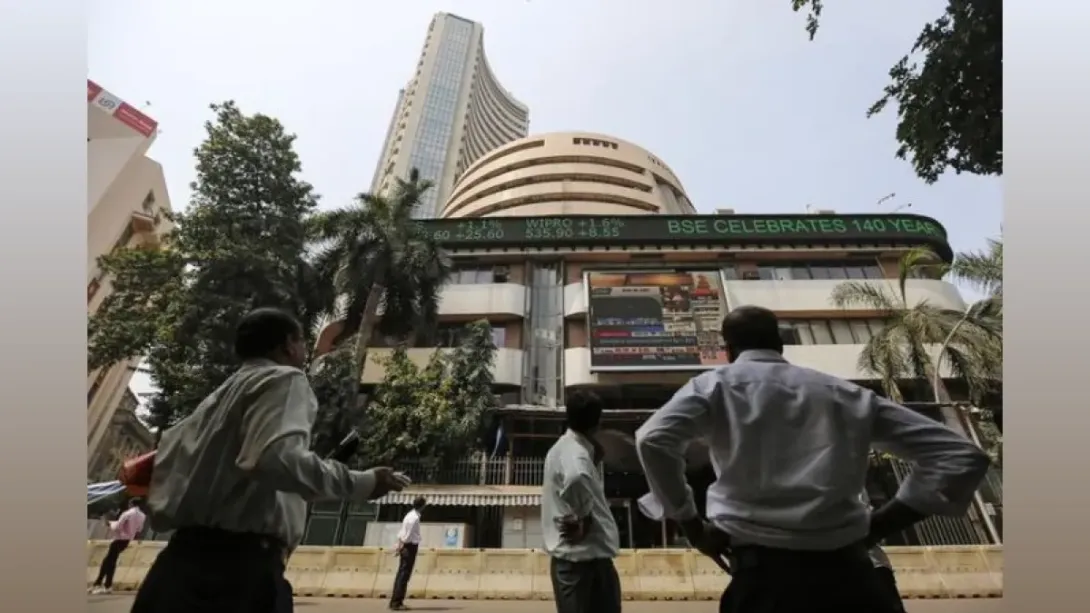
Indian equity markets closed lower as sustained foreign fund outflows pressured frontline indices, underscoring growing investor caution amid global uncertainty. The Sensex declined after overseas institutional investors trimmed exposure to domestic equities, reflecting concerns over global interest rates, currency volatility and risk appetite. While domestic investors offered partial support, it was insufficient to offset selling by foreign funds. The market move highlights India’s sensitivity to global capital flows despite strong macroeconomic fundamentals. Analysts believe near-term volatility may persist until clarity emerges on global monetary policy and geopolitical developments influencing cross-border investment decisions.
Markets Under Pressure from Foreign Selling
The benchmark Sensex ended the session in negative territory as foreign portfolio investors (FPIs) continued to pare holdings in Indian equities. Heavy selling was visible across banking, information technology and metal stocks, sectors that typically bear the brunt of overseas withdrawals due to their high foreign ownership.
Market participants attributed the decline primarily to global factors rather than domestic weakness. Rising bond yields in developed economies and a stronger U.S. dollar have prompted investors to rebalance portfolios away from emerging markets, including India.
Global Signals Drive Capital Flows
Foreign fund outflows have accelerated in recent sessions as expectations of higher-for-longer interest rates in advanced economies dampen appetite for risk assets. With U.S. Treasury yields offering attractive risk-free returns, capital has gradually shifted away from equities in emerging markets.
Additionally, concerns over geopolitical tensions and uneven global growth have reinforced a cautious stance among global asset managers. India, despite its relative economic resilience, has not been immune to this broader risk-off sentiment.
Domestic Investors Provide Limited Cushion
Domestic institutional investors and retail participants stepped in selectively, preventing a sharper fall in the indices. However, their buying was largely stock-specific and lacked the scale required to fully counterbalance foreign selling pressure.
Analysts note that while domestic participation has increased structurally over the past few years, foreign flows still exert significant influence on short-term market direction, particularly during periods of global uncertainty.
Sectoral Performance Reflects Caution
Financial stocks remained under pressure as concerns over valuation and global funding costs weighed on sentiment. Technology shares also slipped, tracking weakness in global tech markets and continued caution around discretionary spending in key overseas markets.
Defensive sectors such as fast-moving consumer goods showed relative resilience, reflecting a preference for earnings stability amid volatility. Mid- and small-cap stocks witnessed mixed trends, with investors increasingly selective.
Outlook: Volatility Likely to Persist
Market experts expect near-term volatility to continue as investors monitor global central bank signals, inflation trends and currency movements. While India’s long-term growth story remains intact, short-term market performance is likely to be dictated by external cues and the pace of foreign fund flows.
Comments