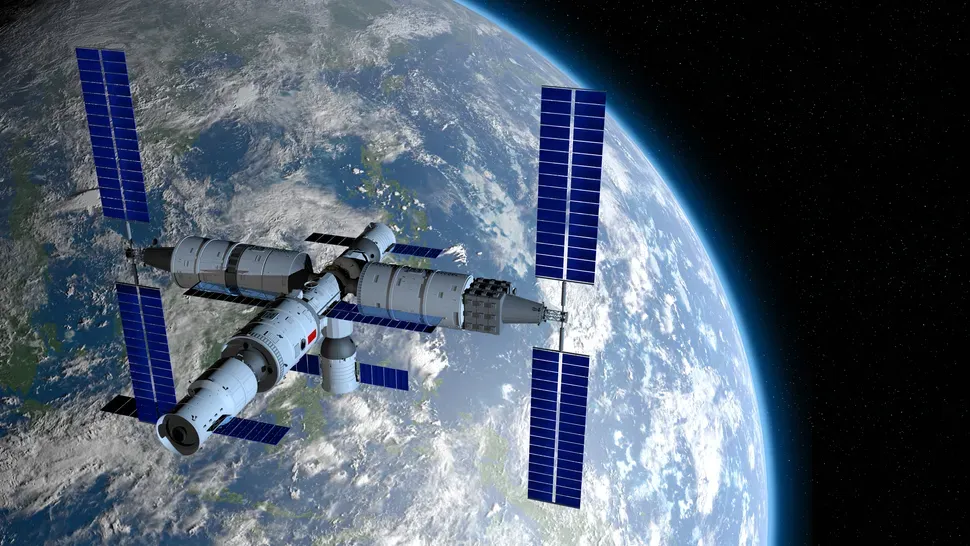
China’s Shenzhou-20 mission marks a significant chapter in the country’s human spaceflight program as its crew prepares for a fourth extravehicular activity (EVA). The upcoming spacewalk, aimed at maintenance, scientific experiments, and assembly tasks on the Tiangong space station, underscores China’s commitment to establishing a permanent orbital presence. With each EVA, astronauts refine operational protocols, test new equipment, and contribute to the long-term functionality of the modular station. Analysts view this mission as a testament to China’s growing technological prowess and strategic positioning in space exploration, while providing critical data for international space research collaboration.
Mission Objectives and EVA Preparations
The Shenzhou-20 crew is scheduled to conduct an intricate fourth spacewalk to:
- Maintain Station Modules: Inspect and repair external components, ensuring structural integrity.
- Deploy Scientific Instruments: Install experimental devices to monitor microgravity effects and cosmic phenomena.
- Test Advanced Space Systems: Evaluate new tools and suits under real operational conditions.
Astronauts undergo rigorous simulations inside neutral buoyancy facilities to rehearse maneuvers and emergency protocols, minimizing risk during the actual EVA.
Significance for China’s Space Program
The Shenzhou-20 mission highlights several strategic objectives:
- Operational Maturity: Demonstrates the ability to conduct repeated complex EVAs, essential for long-term station sustainability.
- Scientific Output: Expands China’s research capabilities in materials science, biology, and space medicine.
- International Positioning: Reinforces China’s status as a leading spacefaring nation, complementing global orbital projects such as the ISS.
Each EVA builds cumulative experience, reducing reliance on ground control and enhancing autonomous decision-making in space.
Technological Innovations in EVA
China has integrated cutting-edge advancements into Shenzhou-20 operations:
- Enhanced Spacesuits: Designed for extended duration EVAs with improved life support, mobility, and radiation shielding.
- Robotic Assistance: External robotic arms support heavy equipment handling, reducing physical strain on astronauts.
- Communication Systems: Real-time telemetry and high-definition video ensure precise coordination with mission control.
These technologies not only ensure safety but also improve efficiency for future long-duration missions.
Global Implications
Shenzhou-20’s activities contribute to broader scientific and strategic trends:
- Data Sharing Opportunities: Experiments conducted in Tiangong may provide valuable insights for the international scientific community.
- Space Station Competition: China’s advancements influence global space exploration dynamics, encouraging innovation and collaboration.
- Foundation for Lunar and Mars Missions: Repeated EVAs enhance astronaut proficiency and equipment testing for deep-space exploration.
Analysts emphasize that China’s consistent EVA operations position it to independently sustain orbital research and support ambitious interplanetary objectives.
Conclusion
As the Shenzhou-20 crew prepares for its fourth spacewalk, the mission epitomizes China’s strategic ascent in space exploration. Through meticulous preparation, advanced technology, and ambitious scientific goals, the EVA will not only strengthen Tiangong’s operational capacity but also bolster China’s reputation as a pioneering force in human spaceflight. Each successful spacewalk reflects the meticulous planning, skill, and technological sophistication that define modern orbital operations.
Comments