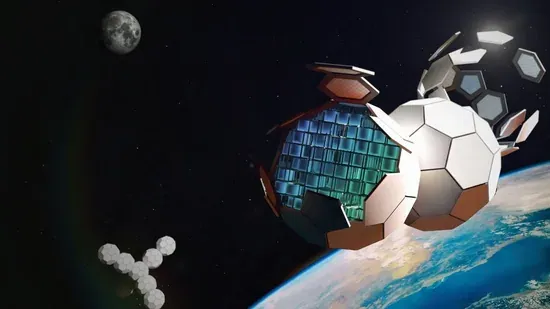
As humanity sets its sights on long-term space exploration and extraterrestrial colonization, engineers and scientists are reimagining space habitats with cutting-edge designs. Traditional concepts of orbiting modules and lunar bases are evolving into sustainable, modular, and resilient structures capable of supporting life in extreme environments. Innovations include self-sustaining ecosystems, radiation-shielding technologies, and adaptable living spaces optimized for microgravity. These developments reflect a convergence of architecture, material science, and life-support engineering, aimed at addressing both human needs and environmental challenges in space. The transformation of space habitats marks a significant step toward viable off-world settlements and interplanetary exploration.
The Evolution of Space Habitats
Early space stations focused on functionality and survival, with minimal consideration for comfort or long-term habitability. Modern initiatives are pushing the envelope by integrating aesthetics, psychological well-being, and adaptability into habitat design. Engineers are exploring modular systems that allow expansion, flexibility, and redundancy, crucial for sustaining human life on extended missions to the Moon, Mars, and beyond.
Cutting-Edge Technologies in Habitat Design
New space habitats are leveraging advanced materials, including radiation-resistant alloys, lightweight composites, and 3D-printed components. Life-support systems now incorporate closed-loop ecosystems capable of recycling air, water, and waste. Artificial gravity modules, modular interiors, and smart environmental controls aim to enhance comfort, safety, and operational efficiency. These innovations collectively ensure that astronauts can thrive in prolonged missions without compromising health or performance.
Sustainability and Human Factors
Designers are emphasizing psychological and social aspects of off-world living. Green spaces, adaptable communal areas, and natural lighting simulations are being integrated to mitigate isolation and stress in confined environments. In addition, energy-efficient systems powered by solar and other renewable sources reduce dependency on resupply missions, aligning with long-term sustainability goals.
Implications for Future Exploration
Redesigned space habitats not only support exploration but also provide testbeds for technologies applicable on Earth, from sustainable living solutions to extreme environment resilience. These advancements pave the way for semi-permanent lunar colonies, Martian bases, and deep-space research outposts. Analysts note that success in these endeavors will require collaboration across aerospace, material science, and life sciences disciplines, underscoring the interdisciplinary nature of space innovation.
Conclusion
The extreme makeover of space habitats signals a transformative phase in human space exploration. By combining advanced engineering, sustainable systems, and human-centric design, these habitats are evolving from functional shelters into livable, resilient environments capable of supporting long-duration missions. As technology continues to advance, the dream of permanent off-world settlements moves closer to reality, redefining the possibilities of human presence beyond Earth.
Comments