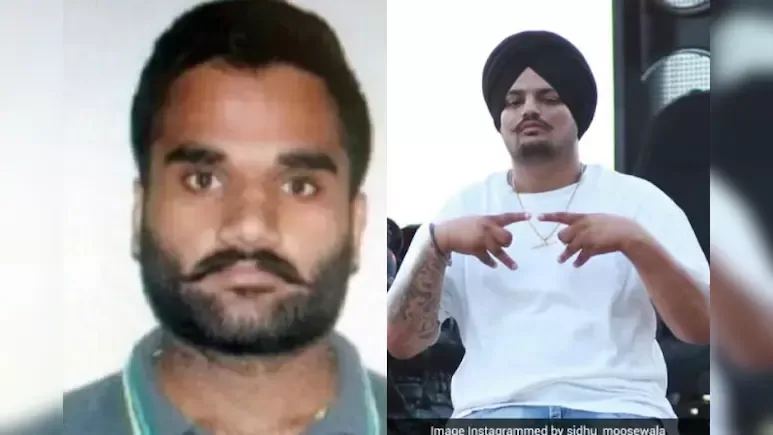
More than two years after the brazen daylight assassination of Punjabi musician Sidhu Moose Wala, the self-proclaimed mastermind, Goldy Brar, has broken his silence. In a candid interview, Brar justified the killing, framing it as a retaliatory act driven by personal grievances and gangland politics. Operating from Canada and declared a terrorist by Indian authorities, Brar alleged that Moose Wala misused political connections to shield rival factions. His disturbing lack of remorse, coupled with ongoing criminal activities abroad, underscores the growing transnational threat posed by organized crime syndicates entangled with terror networks.
A Murder That Shook Punjab
On a sweltering afternoon in May 2022, Sidhu Moose Wala’s life was cut short in a meticulously orchestrated ambush near his native village in Punjab’s Mansa district. The black Mahindra Thar SUV he was driving became a moving target as two trailing vehicles surrounded it. In a matter of moments, more than 100 rounds were fired, leaving the 28-year-old artist dead at the scene.
The brutality of the attack stunned the nation. Moose Wala wasn’t just another celebrity—he was a cultural icon whose music and lyrics gave voice to the aspirations and anxieties of Punjabi youth. His assassination signaled not only a tragic end to a rising star but also a deeper malaise within the region’s criminal and political ecosystem.
The Voice Behind the Gun: Goldy Brar Speaks
In a rare and revealing interview with the BBC, Satinderjit Singh, alias Goldy Brar, offered a chilling account of his rationale. Speaking from an undisclosed location in North America, Brar claimed the killing was a consequence of Moose Wala’s “arrogance” and “political maneuvering” in support of rival factions.
“We had no option but to kill him,” Brar asserted. “It was either him or us.”
A close associate of incarcerated gangster Lawrence Bishnoi, Brar described a history of rising tensions between Moose Wala and their circle, allegedly triggered by a kabaddi tournament in a rival village and exacerbated by perceived acts of betrayal. Brar accused Moose Wala of aligning with political power to support adversaries—allegations that remain unproven but are indicative of the toxic interplay between crime, politics, and public life in parts of northern India.
Interpol Notices and Anti-Terror Charges
Brar, a native of Sri Muktsar Sahib in Punjab, is no small-time thug. He is wanted under a Red Corner Notice issued by Interpol and has been declared a terrorist under India’s Unlawful Activities (Prevention) Act (UAPA). The Ministry of Home Affairs alleges that he is part of a cross-border criminal syndicate responsible for smuggling weapons and explosives from Pakistan into India using drones. His affiliations reportedly extend to the banned separatist outfit Babbar Khalsa International.
In addition to targeted killings, Indian intelligence agencies accuse Brar of orchestrating the recruitment of radical modules intended to destabilize Punjab’s fragile peace.
A System Under Siege
Perhaps the most disturbing element of Brar’s interview was his complete lack of remorse and his cynical dismissal of India’s judicial framework.
“Law. Justice. There's no such thing,” he declared. “Only the powerful can get justice—not people like us.”
His words reflect a troubling narrative—one in which extrajudicial violence is justified as a means of achieving personal retribution, fueled by a deep-rooted mistrust in the state’s ability to deliver justice impartially. When a figure like Brar, with significant criminal clout and international reach, openly rejects the legitimacy of law enforcement, it raises serious questions about governance, accountability, and transnational policing.
Aftermath and Ongoing Threat
Despite being designated a terrorist and having multiple warrants pending, Brar continues to operate with impunity from North America, reportedly coordinating his network remotely. His statements suggest an expanding web of organized crime that is no longer geographically confined but increasingly global in scale and sophistication.
The brazen murder of Moose Wala was not just an isolated act of violence—it was emblematic of a much larger and systemic problem. It exposed the frailty of regional security apparatuses, the encroachment of organized crime into mainstream politics, and the ease with which international safe havens are exploited by fugitives.
Conclusion: Beyond Justice, a Crisis of Trust
The assassination of Sidhu Moose Wala has become more than a criminal case—it is now a case study in the erosion of public trust, the failure of preventive law enforcement, and the complexities of tackling transnational crime. As Goldy Brar’s words echo across digital platforms and international borders, the urgency for coordinated global action grows louder.
India’s challenge is not only to bring the perpetrators to justice but also to reinforce confidence in a legal system increasingly undermined by extralegal narratives. For Moose Wala’s fans and family, closure remains elusive. For the state, the stakes couldn’t be higher.
Comments