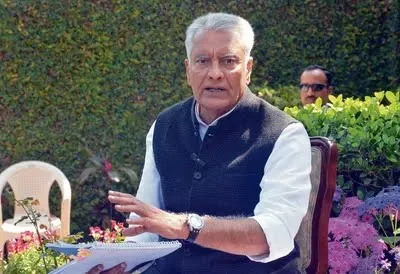
In a significant political statement, Punjab BJP president Sunil Jakhar has emphasized the importance of rekindling the Bharatiya Janata Party’s alliance with the Shiromani Akali Dal (SAD) to foster communal harmony and social equilibrium in the state. Jakhar underlined the alliance’s historical role in maintaining peace and stability across Punjab's religious and political spectrum. While political differences led to a split between the two parties in 2020, Jakhar's remarks signal a strategic openness to reconciliation, rooted in the belief that unity between key political players is essential for long-term cohesion in Punjab’s diverse socio-political landscape.
Historical Alliance, Contemporary Relevance
The BJP-Akali Dal alliance once stood as a powerful political coalition in Punjab, combining the national appeal of the Bharatiya Janata Party with the regional influence and cultural roots of the Shiromani Akali Dal. This partnership governed the state for over a decade, often being credited with promoting communal balance between Punjab’s majority Sikh population and the sizeable Hindu minority.
Sunil Jakhar’s recent call to revive this alliance is not merely nostalgic; it reflects a broader understanding of the delicate communal dynamics that define Punjab’s political ecosystem. In a region where religious identity and political affiliation are deeply intertwined, Jakhar suggests that strategic unity could serve as a buffer against polarization.
Political Stability Through Inclusive Alliances
Jakhar’s remarks underline the political and social utility of cross-community alliances in a state historically marked by sectarian unrest. By advocating reconciliation with the Akali Dal, the BJP leadership in Punjab appears to be revisiting the idea that long-term stability depends on cooperative governance rather than electoral competition.
The potential re-alliance, if pursued, could alter the state’s political balance, especially as both parties face pressure from emerging forces such as the Aam Aadmi Party and resurgent regional outfits. According to Jakhar, the primary motivation behind this approach is not electoral arithmetic, but the need to preserve a culture of dialogue, respect, and inter-community trust.
Political Context and Strategic Realignment
The earlier dissolution of the BJP-Akali Dal alliance in 2020 occurred over disagreements related to the now-repealed farm laws, leading to a deepening rift between the two sides. Since then, both parties have independently recalibrated their political strategies. However, with national and state elections looming, Jakhar’s outreach may indicate a willingness to prioritize Punjab’s social cohesion over past grievances.
Such a move would not be without hurdles. Rebuilding trust between the two political entities would require significant ideological negotiation and mutual concessions. Yet Jakhar’s comments open the door to what could become one of the most impactful political realignments in the region in recent years.
Communal Harmony as Political Currency
Beyond electoral calculations, Jakhar’s argument rests on the premise that Punjab’s unique cultural mosaic demands a governance model rooted in pluralism. By aligning with a Sikh-majority party that has deep religious and cultural ties, the BJP can demonstrate its commitment to inclusive governance. Conversely, for the Akali Dal, a renewed partnership could restore relevance and credibility amid a fractured political landscape.
Jakhar’s messaging, therefore, speaks to more than just party politics — it taps into a broader appeal for societal reconciliation, projecting the BJP as a party ready to work across ideological boundaries for the greater good of Punjab.
Conclusion
Sunil Jakhar’s endorsement of a potential BJP-Akali Dal reunion marks a pivotal moment in Punjab’s political narrative. At a time when the state faces both internal and external pressures to maintain harmony, Jakhar’s proposal suggests that enduring peace and development require more than fragmented leadership — they demand a united political front that transcends past conflicts. Whether this vision translates into actionable coalition-building remains to be seen, but the conversation it has sparked is undeniably central to Punjab’s future.
Comments