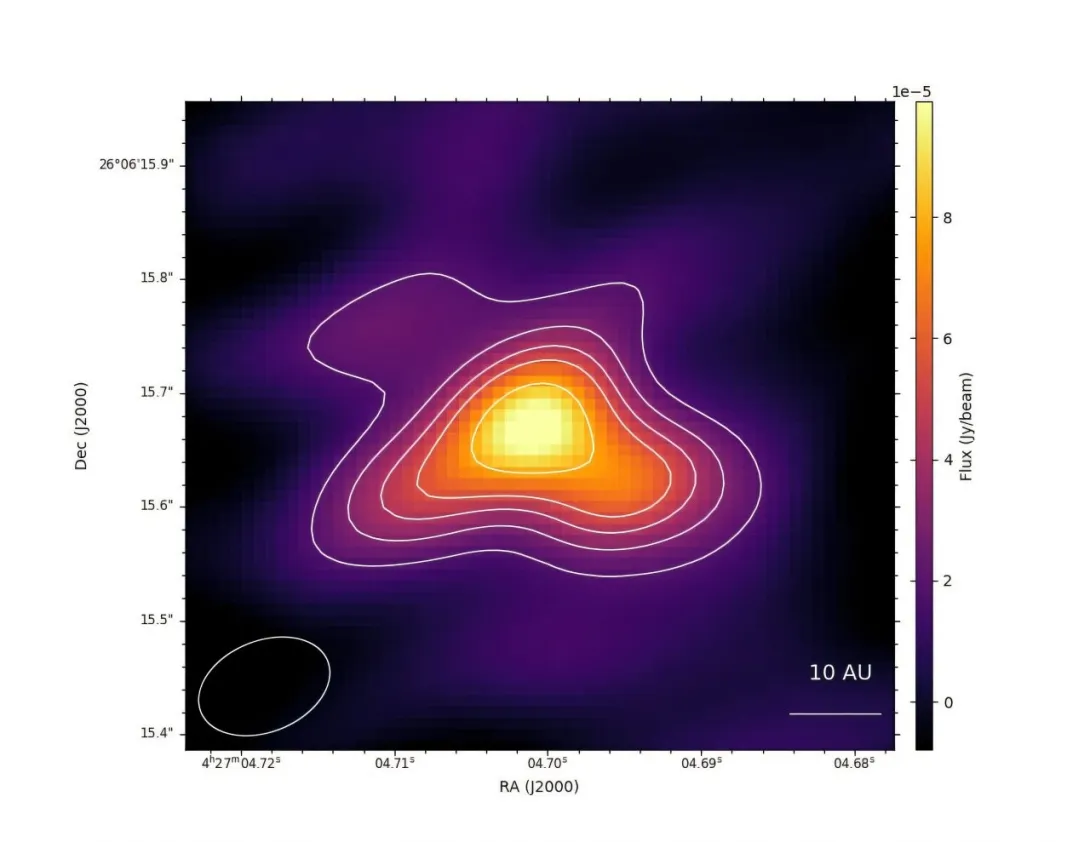
In a landmark astronomical discovery, researchers have unveiled evidence that small rocky 'pebbles' orbiting young stars play a pivotal role in forging new solar systems. These modest cosmic fragments, some scarcely larger than grains of sand, collide and coalesce over millions of years, laying the groundwork for planets, moons, and eventually entire planetary systems. This revelation reshapes longstanding theories of how worlds like our own come into existence. It also sharpens our understanding of planetary formation timelines, offering profound implications for the search for life beyond Earth and the dynamics of countless exoplanetary systems scattered across the cosmos.
The Power of Pebbles: Rethinking Planetary Genesis
For decades, astronomers largely envisioned planetary formation as a process dominated by large-scale collisions among kilometer-sized bodies — so-called planetesimals. However, new observations and advanced simulations suggest that far smaller particles — pebbles just a few centimeters wide — may be the true architects of planetary birth.
These diminutive rocks swirl within protoplanetary disks — vast, dusty rings encircling nascent stars. Gradually, their gentle but persistent collisions lead to the creation of larger, gravitationally bound bodies, effectively jump-starting the assembly line of planets.
Cutting-Edge Observations with ALMA and Other Instruments
This breakthrough owes much to data collected by the Atacama Large Millimeter/submillimeter Array (ALMA) in Chile. Using its extraordinary sensitivity, scientists have peered deep into young stellar systems, capturing high-resolution images of dust and pebble-sized material aggregating in distinctive patterns.
These detailed portraits reveal subtle ripples and gaps within the disks, signatures of forming planetary bodies that are sweeping up material as they orbit. Such findings lend compelling observational weight to the pebble accretion model, moving it from intriguing hypothesis to robust scientific framework.
Economic and Philosophical Stakes: Why This Matters on Earth
While distant planetary nurseries might seem far removed from our daily concerns, understanding their formation carries surprising economic and existential weight. The global space economy — projected to exceed Rs. 38 lakh crore (about $460 billion) by 2030 — increasingly hinges on insights from astrophysics to guide future missions, from asteroid mining to advanced satellite deployments.
More broadly, these discoveries deepen humanity’s grasp of its cosmic context. Knowing that our Earth may have begun from a similar swirl of humble pebbles connects us to a universal process — one playing out right now in countless star systems across the galaxy.
Speeding Up Planet Formation: A Shorter Cosmic Clock
Traditional models predicted that building a planet could take tens of millions of years, constrained by the slow dance of large rocks colliding under mutual gravity. However, pebble accretion theory suggests a dramatically faster timeline. Because small pebbles are more easily captured by growing planetary cores, entire planets might emerge in just a few million years — a blink by cosmic standards.
This accelerated schedule also has implications for planetary atmospheres and the likelihood of habitable conditions emerging before stellar environments grow too volatile.
The Next Frontier: Testing These Ideas in Other Systems
Astrophysicists are now turning their attention to a broader array of young stars, hoping to catch even earlier snapshots of pebble assembly. Missions such as the James Webb Space Telescope and next-generation radio arrays will probe these distant disks in unprecedented detail.
By cataloging the composition, size distribution, and temperature profiles of pebbles around different types of stars, scientists aim to refine their models — perhaps uncovering why some systems yield gas giants while others favor rocky terrestrial worlds.
A Thoughtful Conclusion: Humble Origins, Grand Destinies
In the end, this research invites a humbling reflection. The same minute pebbles that swirl unseen around infant stars today may, billions of years hence, give rise to oceans, continents, and perhaps even life. For investors and policymakers staking fortunes on the future of space exploration — and for dreamers who simply look skyward on a clear night — such discoveries remind us that profound complexity can spring from the most unassuming origins.
Comments