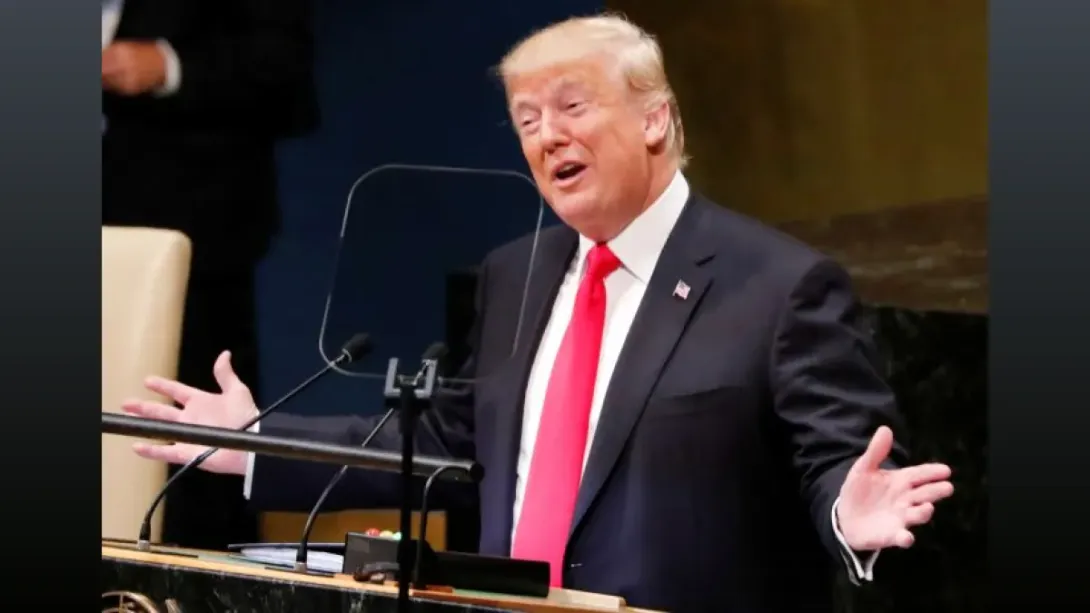
Former U.S. President Donald Trump has reignited speculation around a long-anticipated trade deal between the United States and India, suggesting that an agreement could be finalized in the near future. While no official timeline or framework has been released, Trump’s remarks have renewed interest in strengthening economic ties between the two countries, especially in sectors such as technology, pharmaceuticals, agriculture, and defense. With both economies navigating shifting global trade dynamics and supply chain realignments, a potential bilateral accord could mark a significant pivot in the Indo-U.S. economic partnership and geopolitical alignment.
---
A Renewed Push for Bilateral Trade Engagement
Donald Trump’s recent statement indicating the likelihood of a U.S.-India trade agreement has injected momentum into a conversation that has remained dormant since the end of his presidential term. Trade talks between the two democracies had intensified during his administration but were ultimately stalled over disagreements related to tariffs, data localization, market access, and intellectual property protections.
While not currently in office, Trump’s endorsement of the deal—amidst speculation about his potential re-election campaign—signals that a future administration under his leadership would prioritize forging closer economic ties with India, potentially fast-tracking stalled negotiations.
---
Key Sectors Poised for Inclusion
A prospective trade deal between the U.S. and India is expected to cover a broad range of sectors that align with mutual strategic interests. Among these, pharmaceuticals and medical devices are likely to feature prominently, given India’s status as a global generics hub and the U.S. market’s demand for cost-effective, high-quality healthcare solutions.
Other sectors likely to be addressed include digital services, clean energy technologies, defense procurement, agricultural goods, and rare earth minerals. An agreement could open doors for deeper collaboration in critical and emerging technologies such as semiconductors, cybersecurity, and artificial intelligence.
---
Trade Imbalances and Tariff Complexities
One of the longstanding hurdles in U.S.-India trade discussions has been the issue of tariffs. India’s high import duties on certain American goods, particularly agricultural and luxury products, have been a point of contention. Similarly, India has sought better access for its textiles, IT services, and generic drugs in the U.S. market.
A balanced agreement would need to address these asymmetries without disrupting domestic industries in either country. The broader objective, according to policy experts, would be to foster reciprocal market access, improve regulatory harmonization, and establish a predictable trade environment for businesses on both sides.
---
Strategic and Geopolitical Implications
Beyond economics, a U.S.-India trade pact would carry significant strategic weight. As both nations deepen defense and security cooperation under the Quad alliance and shared Indo-Pacific priorities, a robust trade framework would serve to complement and reinforce their geopolitical alignment.
At a time when supply chain diversification is a critical concern for Washington, India’s role as a manufacturing alternative to China continues to gain traction. A trade agreement could facilitate investment flows, boost technology transfers, and strengthen bilateral resilience in the face of global uncertainties.
---
Political Calculus and Future Trajectory
Trump’s comments come at a time of evolving political equations in both countries. While India is consolidating its position as a leading voice in the Global South, the U.S. is recalibrating its foreign trade strategies amidst rising protectionist sentiment and shifting global alliances.
Should Trump regain office in the upcoming election cycle, analysts expect the trade negotiations to resume with renewed urgency, leveraging the strong personal rapport he previously shared with Indian leadership. Even without a formal deal, incremental agreements or sectoral cooperation could serve as stepping stones toward a broader economic partnership.
---
Conclusion
The prospect of a U.S.-India trade deal, once again brought into the spotlight by Donald Trump’s remarks, holds considerable promise for reshaping one of the world’s most consequential bilateral relationships. While challenges persist, the evolving global trade landscape and strategic convergence between the two nations suggest that a well-crafted agreement could yield mutual economic gains and strengthen democratic alliances for years to come.
Comments