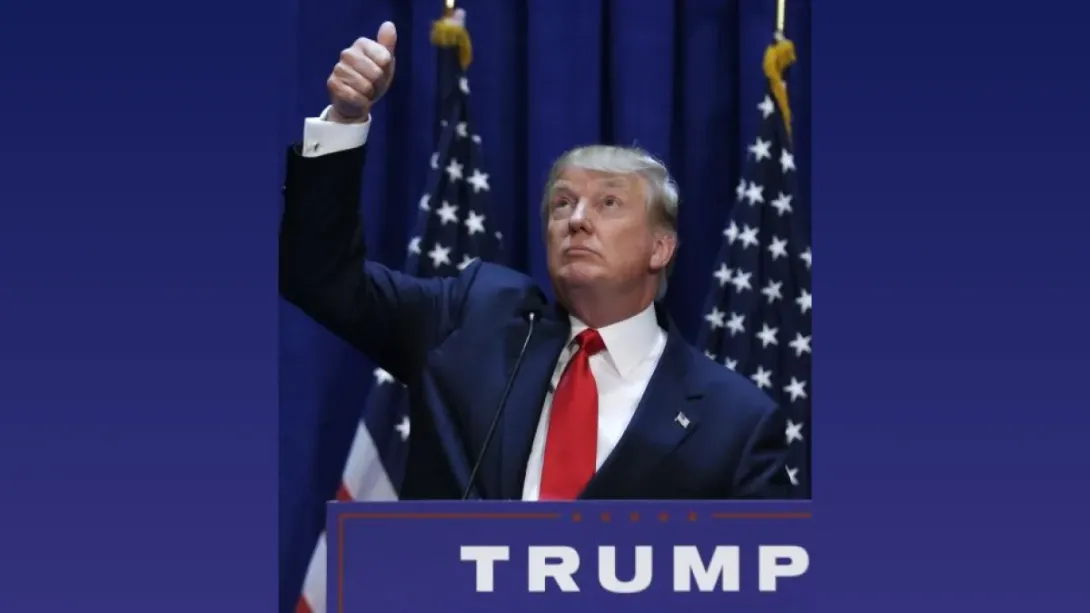
Former U.S. President Donald Trump has issued a stark warning that, should he return to office, American technology firms could face a complete expulsion from China. The statement marks a significant escalation in the geopolitical tech standoff between the world’s two largest economies. Trump's remarks have sparked global debate, particularly as they coincide with growing Western concerns over critical supply chains, intellectual property theft, and national security. Meanwhile, India is emerging as a potential beneficiary of this tectonic shift, positioning itself as an alternative manufacturing and R&D hub for global technology firms seeking to diversify away from China.
Trump’s Hardline Stance: A Strategic Signal or Economic Gamble?
Donald Trump’s recent declaration that he would “end U.S. tech in China” if re-elected represents more than political posturing—it signals a potential redrawing of the global tech map. The former president’s tough rhetoric plays into a broader narrative of economic decoupling that began during his administration and has continued under his successor, albeit in a more measured fashion.
While specifics remain vague, the implications are clear: Trump envisions a future where American giants such as Apple, Intel, and Qualcomm may be compelled to cut ties with Chinese manufacturing partners and software ecosystems. If enforced, this policy could disrupt multi-billion-dollar supply chains and force global corporations to reassess long-standing production strategies.
Impact on American Tech Giants: Disruption or Opportunity?
A forced exit from China would be a seismic shift for U.S. technology companies, many of which rely on the country for manufacturing, assembly, and in some cases, a significant portion of their consumer base. Apple, for example, sources a substantial share of its hardware production from Chinese factories. An abrupt decoupling could result in significant cost escalations, reduced margins, and logistical chaos in the near term.
However, for firms that have already begun diversification—shifting production to Vietnam, Malaysia, and India—the announcement may accelerate existing strategies rather than initiate new ones. The long-term result could be a leaner, more geopolitically resilient supply chain, albeit at a cost.
India’s Growing Appeal: A Rare Opportunity Amid Global Realignment
India stands to gain from any U.S.-China tech disengagement. With its expanding digital infrastructure, improving ease of doing business, and growing pool of skilled labor, India is increasingly viewed as a viable alternative to China. Major players like Apple and Foxconn have already ramped up investments in Indian manufacturing, signaling confidence in its long-term potential.
If Trump’s vision materializes, India could attract even more foreign direct investment (FDI) in electronics, semiconductors, and R&D. This could not only create high-skilled jobs domestically but also elevate India’s standing in the global tech ecosystem.
Strategic Ramifications: Decoupling and the New Tech Cold War
Trump’s comments must also be viewed through the lens of national security. The U.S. has grown wary of China’s advancements in artificial intelligence, 5G, and quantum computing—fields with both civilian and military applications. A broader tech decoupling, while disruptive, may be perceived by Washington as necessary to preserve strategic advantage.
In turn, Beijing may respond with retaliatory measures or accelerated efforts to achieve technological self-sufficiency. The result would be a more fragmented global tech landscape—less efficient, more regionalized, but possibly more secure from the perspective of national governments.
Conclusion: From Rhetoric to Reality
Whether Trump’s statements are electoral rhetoric or a policy blueprint remains to be seen. However, the warning is a reflection of broader geopolitical currents already reshaping the global economy. For U.S. tech firms, the path forward is fraught with uncertainty. But for countries like India, it may be a rare moment to leap ahead—provided they can capitalize on the global appetite for diversification.
In the balance hangs not just the future of American tech in China, but the architecture of the next global digital era.
Comments