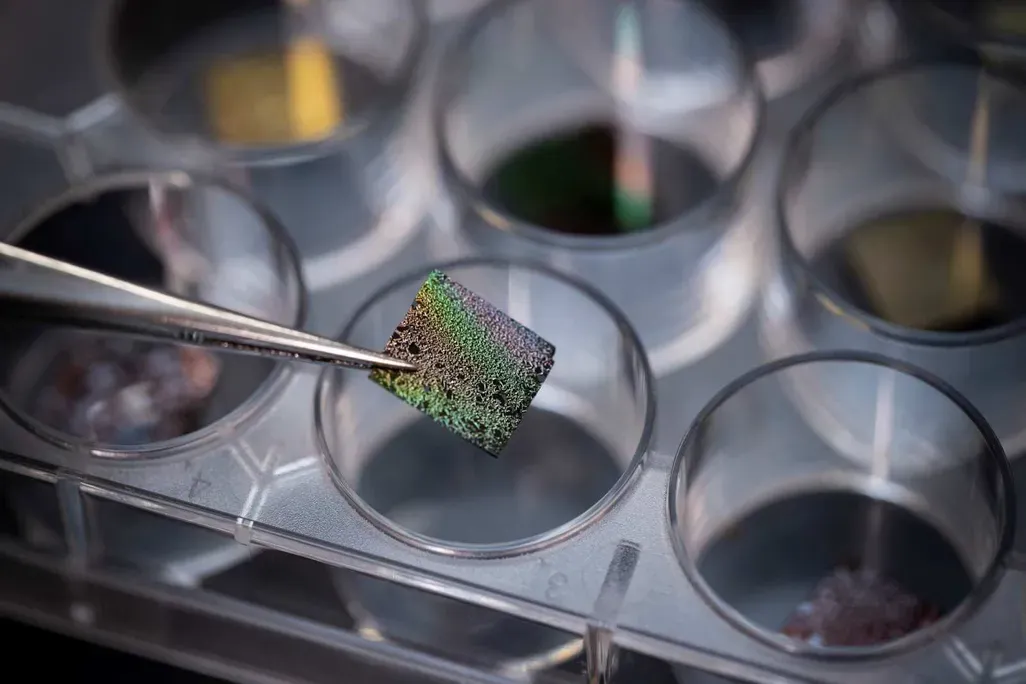
Researchers at the University of Sydney have achieved a groundbreaking scientific feat by successfully recreating cosmic dust under controlled laboratory conditions, simulating the interstellar environment of deep space. This advancement allows unprecedented insights into the formation of stars, planets, and complex molecules that seed life in the universe. By replicating cosmic dust interactions with light, heat, and radiation, scientists can now study chemical pathways and particle behaviors previously observable only through telescopes. Astrophysicists assert that these experiments will refine models of cosmic evolution, enhance understanding of planetary system formation, and illuminate the origins of organic compounds essential to life.
The Experiment and Methodology
The research team employed ultra-high vacuum chambers, precise temperature controls, and lasers to mimic the extreme conditions of interstellar space. Microscopic dust analogues, composed of silicates and carbon-based compounds, were observed interacting under simulated cosmic radiation.
Astrophysicists highlight that recreating such conditions in a laboratory setting allows direct observation of processes that, until now, were inferred from distant astronomical observations. This approach bridges theoretical models and empirical experimentation.
Scientific Significance
Cosmic dust plays a crucial role in star formation, planetary evolution, and the chemical enrichment of galaxies. Studying its properties helps researchers understand how simple particles coalesce into complex structures and how organic molecules form in space.
The University of Sydney experiments provide detailed insights into the physical and chemical behaviors of dust grains, shedding light on processes that influence the birth of planets and the distribution of life-essential elements.
Implications for Astrophysics and Space Science
Laboratory recreation of cosmic dust enables scientists to test hypotheses about interstellar chemistry, light absorption, and particle aggregation. These findings can refine models used by space agencies and observatories for interpreting cosmic signals, such as infrared emissions and interstellar spectra.
Experts believe this research could inform the study of protoplanetary disks, cometary chemistry, and the origins of prebiotic molecules, deepening understanding of how life-essential compounds emerge in space.
Future Directions
The University of Sydney team plans to expand their studies by introducing more complex chemical mixtures, varying radiation types, and exploring dust interactions with simulated planetary atmospheres. Collaborative initiatives with international space research organizations aim to validate laboratory findings against observational data from telescopes and space missions.
By bridging laboratory experiments with astronomical observations, these studies pave the way for a more comprehensive understanding of cosmic evolution, the formation of solar systems, and the chemical precursors to life.
Conclusion
Recreating cosmic dust in a lab marks a major step forward in astrophysics, providing a tangible platform to explore the universe’s most fundamental building blocks. The research demonstrates the power of controlled experimentation in unraveling cosmic mysteries, offering new perspectives on how stars, planets, and potentially life itself emerge from the dust of the cosmos.
Comments