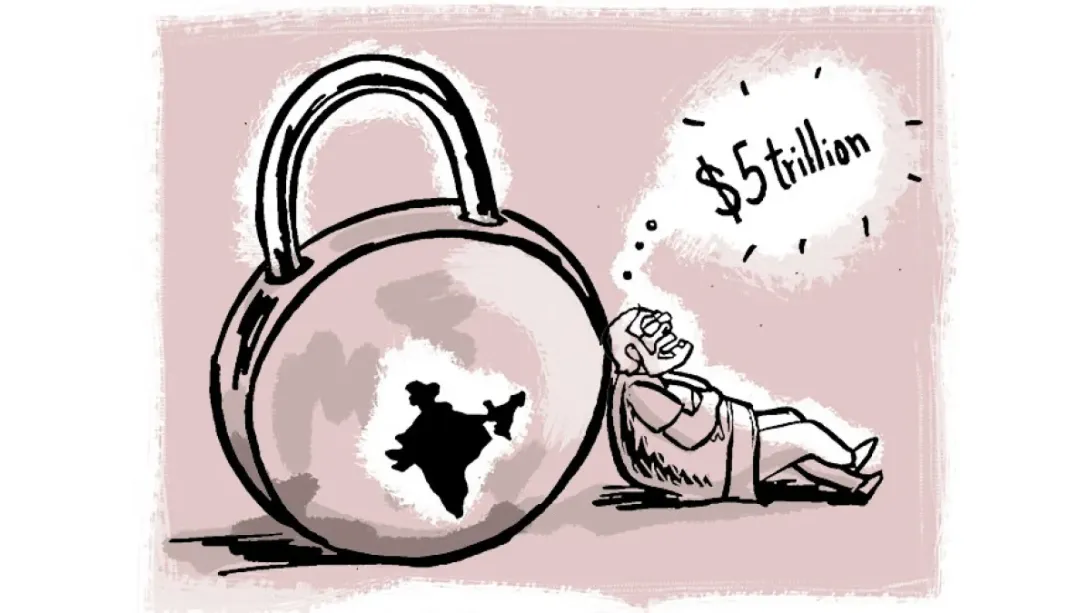
As India charts a path toward becoming a $5 trillion economy, the spotlight is turning toward a critical enabler—risk capital. While public investment, infrastructure spending, and policy reforms have laid the groundwork for sustained growth, the country’s entrepreneurial and innovation ecosystem requires deeper access to patient, high-risk capital to scale. From deeptech startups and green energy ventures to SMEs and next-gen manufacturing, India’s economic ambitions hinge on mobilizing private equity, venture capital, and institutional funding at scale. A robust risk capital environment could be the catalyst India needs to fuel innovation, create jobs, and accelerate economic transformation.
---
The $5 Trillion Vision: More Than GDP Arithmetic
India’s goal of reaching a $5 trillion economy is not merely a statistical milestone—it represents a broader aspiration to elevate national income, create inclusive employment opportunities, and transition into a high-value, innovation-driven growth model. Achieving this target will require annual GDP growth in the range of 8–9% over the next few years, a feat that demands more than conventional policy levers.
While macroeconomic fundamentals have shown resilience—buoyed by strong foreign exchange reserves, demographic advantages, and government-led infrastructure push—the critical accelerator missing in this equation is a sustained infusion of risk capital.
---
Understanding Risk Capital: Why It Matters Now
Risk capital refers to investments made with an understanding of higher-than-average uncertainty, typically in early-stage or transformative ventures. This includes venture capital, private equity, seed funding, and patient institutional capital.
In developed economies, these instruments have played a pivotal role in scaling disruptive technologies, financing first-generation entrepreneurs, and nurturing unicorns. India, despite being the third-largest startup ecosystem globally, still lacks the depth and breadth of domestic risk capital needed to power frontier innovation, particularly outside digital consumer tech.
For sectors like climate tech, agritech, biotechnology, defense innovation, and industrial automation, where gestation periods are long and return cycles complex, the scarcity of risk capital poses a serious bottleneck.
---
Startup Surge Meets Capital Constraints
India's startup ecosystem has witnessed explosive growth over the past decade, with over 100 unicorns and a dynamic base of 100,000+ registered startups. However, the funding landscape remains uneven. Most venture capital flows are concentrated in select metros, with a strong bias toward late-stage consumer-facing platforms.
The need of the hour is to democratize access to early-stage capital across Tier-II and Tier-III cities, and to widen the pool of domestic investors willing to take calculated risks. Expanding the availability of seed and Series A funding will be crucial for founders building deeptech, climate-resilient, or export-oriented business models.
---
Institutional Role and Policy Imperatives
To catalyze a culture of risk-taking, India needs to deepen its domestic venture capital ecosystem. While foreign funds have long dominated the private equity and VC landscape, building indigenous risk capital pools—through sovereign funds, development finance institutions, pension fund allocations, and insurance sector participation—will create long-term stability.
Regulatory reforms are also essential. Simplifying compliance, allowing easier exit mechanisms, and offering tax incentives for high-risk investments could significantly improve investor sentiment. Moreover, initiatives like the Fund of Funds for Startups (FFS) and Startup India need to be scaled and targeted toward strategic sectors aligned with national priorities.
---
The Role of Private Sector and Capital Markets
India’s vibrant capital markets can play a pivotal role in channeling capital toward innovation. Encouraging tech-focused IPOs, deepening SME listings, and supporting public market vehicles focused on startups and early-stage investments could open new financing avenues.
Corporates, too, must step forward—through corporate venture capital (CVC), strategic partnerships, and innovation accelerators—to nurture high-risk, high-reward ventures. This is particularly important in sectors like electric mobility, semiconductor manufacturing, and renewable energy, where strategic alignment can unlock significant scale and competitiveness.
---
Building the Risk Culture: Education, Trust, and Patience
For India to embrace risk capital at scale, a cultural shift is equally important. Entrepreneurial risk-taking must be viewed not as speculative but as essential to nation-building. Investor education programs, greater transparency in fund governance, and public success stories can help demystify venture investing and build broader trust in high-risk capital instruments.
Moreover, a patient capital mindset—willing to forgo short-term returns in favor of long-term economic and strategic gains—must be cultivated, especially for critical sectors such as space, defense, and healthtech.
---
Conclusion: From Capital Scarcity to Capital Strategy
India’s $5 trillion economy target is not out of reach, but it cannot be powered by debt-led or consumption-driven growth alone. Strategic deployment of risk capital—across sectors, geographies, and growth stages—will be the multiplier that transforms intent into impact.
Policymakers, private investors, and institutional stakeholders must align to create a vibrant, future-ready capital architecture that rewards innovation, backs bold ideas, and sustains long-term national growth. If India gets its capital strategy right, the economic transformation it seeks could arrive faster—and with far more resilience—than expected.
Comments