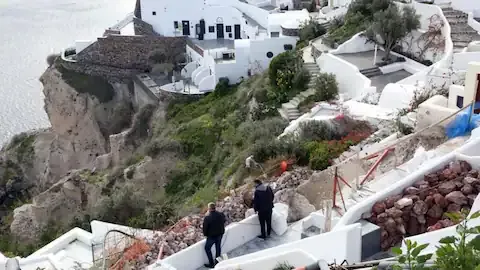
Santorini, one of the world’s most iconic volcanic islands, has experienced thousands of small earthquakes in recent years, raising concerns about potential volcanic unrest. New scientific insights now reveal that these tremors were not random anomalies but the result of subtle geological movements deep beneath the island’s surface. By analyzing seismic data, ground deformation, and magma chamber dynamics, researchers have identified the precise forces driving this intense seismic activity. Their findings offer crucial clarity on how pressure changes within Santorini’s subterranean system can trigger widespread earthquakes—knowledge that enhances volcanic monitoring and strengthens early-warning frameworks for regions with similar geological profiles.
---
A Volcanic Landscape Shaped by Deep Earth Forces
Santorini’s horseshoe-shaped caldera, formed through one of history’s most powerful volcanic eruptions, sits atop a highly active tectonic zone. For decades, scientists have monitored the island’s seismic behavior to understand the fluctuating interplay of magma, gases, and fractured rock beneath the surface. The recent burst of earthquakes, numbering in the thousands, initially sparked speculation about an impending eruption or major geological shift.
However, detailed assessments now indicate that the seismic activity was primarily linked to gradual pressure redistribution within the volcano’s magma reservoir. Instead of signaling an immediate eruptive threat, these tremors reflected a natural rebalancing process occurring within Santorini’s intricate volcanic plumbing system.
---
Magma Chamber Dynamics: The Core of the Disturbance
Researchers found that subtle injections of magma into pre-existing cavities caused measurable yet controlled inflation of the caldera. This inflation was not sudden but evolved over months, creating stress along faults that crisscross the island. As the magma pushed against surrounding rock formations, it produced small ruptures responsible for the widespread earthquake swarm.
Notably, the earthquakes occurred at shallow depths, suggesting that the activity originated within confined zones rather than from a large-scale upward movement of molten material. This pattern reassures scientists that the seismic cluster represented internal adjustments rather than the onset of a major explosive event.
---
Ground Deformation as a Critical Indicator
High-precision instruments recorded slight elevation changes around the caldera’s center. These ground movements, though minimal, helped experts map the pressurization patterns of the volcanic system. The deformation aligned with seismic readings, confirming that the earthquakes were a direct response to internal strain rather than tectonic plate activity alone.
Such findings underscore the vital role of continuous monitoring. Even minor ground shifts can offer valuable clues about stress accumulation and energy release in volcanic regions.
---
Improved Monitoring and Future Preparedness
The new analysis significantly enhances the scientific community’s understanding of how moderate magma movements manifest as extensive earthquake sequences. For Santorini, this knowledge strengthens long-term risk assessment models and equips local authorities with clearer interpretations of early warning signals.
While the island remains volcanically active, current evidence does not point to imminent danger. Instead, the earthquake swarm represents an essential reminder of the dynamic forces shaping Santorini’s geological identity.
---
A Window Into Earth’s Subsurface Processes
The revelations surrounding Santorini’s seismic episode highlight the complexity of volcanic environments and their sensitivity to internal micro-adjustments. By decoding the mechanisms behind these earthquakes, researchers provide a valuable framework for interpreting similar patterns in other volcanic zones worldwide.
The findings reaffirm a fundamental truth: understanding the Earth’s deep processes is key to protecting lives, preserving heritage sites, and anticipating the future behavior of some of the planet’s most awe-inspiring natural formations.
Comments