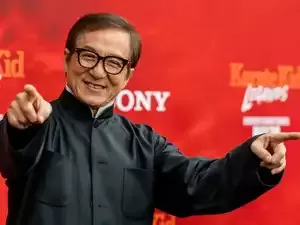
In a candid revelation, global action icon Jackie Chan disclosed that he learned in his forties that his father had served as a spy during China’s turbulent mid-20th century. Now 71, Chan shared his personal history in a recent interview, shedding light on a lineage steeped in secrecy and political intrigue. Beyond the action-packed image he cultivated on screen, Chan's roots reveal a complex family past, including a father with clandestine affiliations and a mother once involved in the opium underworld. As he returns to the silver screen in Karate Kid: Legends, this deeper look at Chan’s past reframes the man behind the legend.
A Startling Discovery in Midlife
Jackie Chan, born in Hong Kong and celebrated globally for redefining action cinema, recently reflected on a defining personal moment that came unexpectedly in middle age. During a drive with his father, Charles Chan, the elder man confessed to a life Jackie had never imagined. “Son, I might sleep and never wake up,” he began, before revealing that he had once operated as a spy during the Chinese Civil War.
More astonishingly, Jackie learned that his family name was not Chan, but Fang. The revelation came with an overwhelming emotional impact, leaving the actor too stunned to absorb the full backstory at the time. “I was very shocked,” he admitted, underlining the magnitude of the truth withheld from him for decades.
A Family Shrouded in Secrecy
The deeper narrative of Chan’s lineage came into sharper focus with the 2003 release of Traces of the Dragon: Jackie Chan and His Lost Family, a documentary he commissioned. The film chronicles the life of Charles Chan, who worked undercover for the Nationalist government in the 1940s, navigating espionage and survival in a politically volatile China.
Equally striking was the documentary’s portrayal of Jackie’s mother, Lee-lee, who led a life equally cloaked in danger and secrecy. Once involved in the opium trade and underground gambling rings, she, too, lived a life far removed from the public image of a traditional Chinese family.
The duality of Chan’s upbringing—rooted in political turbulence and underground dealings—stands in stark contrast to the disciplined martial arts and comedic resilience he has projected for decades on screen.
A Cinematic Journey from East to West
Chan’s path to international stardom began with cult classics in Hong Kong but took a dramatic turn in the 1990s. His breakthrough in the West came with Rumble in the Bronx in 1995, establishing him as a unique crossover talent. The 1998 blockbuster Rush Hour, co-starring Chris Tucker, cemented his place in Hollywood, blending action and humor with East-meets-West charisma.
Known for doing his own stunts and injecting choreography with slapstick inventiveness, Chan built a brand that was both physically daring and globally accessible. Yet, few fans realized the depth of resilience and adaptability forged by a past shadowed by espionage and adversity.
Returning to the Screen: Karate Kid: Legends
Even at 71, Jackie Chan is not slowing down. He recently returned to one of his most beloved franchises in Karate Kid: Legends, released in India on May 30. The film sees Chan reprise his role alongside Ralph Macchio, who returns as Daniel LaRusso. Together, they mentor a new martial arts protégé, portrayed by Ben Wang, against a backdrop that bridges tradition with contemporary struggles.
The trailer hints at a tone of mentorship and legacy. In one evocative scene, Chan delivers a reflective line: “In life, you only have one question: Is it worth fighting for or not?” It's a moment that resonates deeply, especially in light of the actor’s newly publicized personal history.
The Man Behind the Myth
Jackie Chan’s admission that his life story contains hidden chapters adds emotional depth to a public persona long celebrated for its physicality and humor. His father’s clandestine service and his mother’s underworld past paint a more textured portrait of a man shaped by extraordinary circumstances.
In an industry often obsessed with reinvention, Jackie Chan’s most compelling transformation may be personal, not professional. By pulling back the curtain on his origins, he invites audiences to reconsider not just his films, but the intricate, often painful forces that shaped his path to stardom.
Conclusion
Jackie Chan’s story is no longer just one of acrobatic stunts and box-office hits—it is also one of rediscovery, reconciliation, and remarkable personal strength. As he continues to engage audiences across generations, his willingness to share deeply personal revelations elevates his legacy beyond entertainment. It becomes a testament to the human capacity to endure, adapt, and grow—even when the truth arrives decades late.
Comments