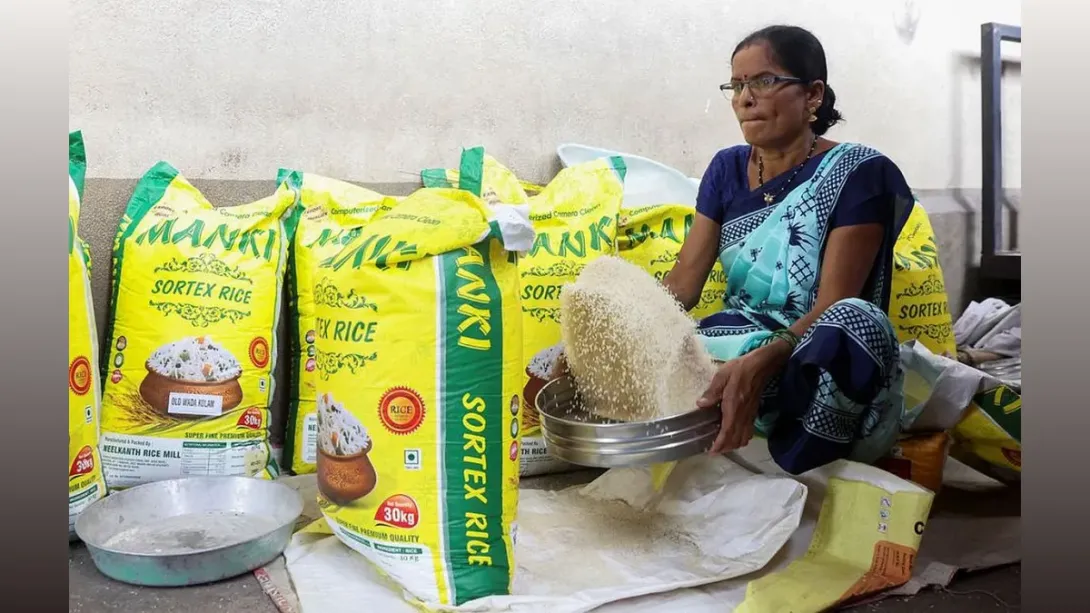
The Indian Rice Exporters Federation (IREF) has responded to the newly imposed U.S. tariffs on select Indian rice exports, characterizing the move as a temporary hurdle rather than a long-term disruption. While the levy has stirred short-term concerns among traders and exporters, the federation maintains that global demand for Indian rice remains resilient and that alternative markets can absorb the redirected volumes. IREF further emphasized India’s diversified export geography and competitive pricing as structural strengths, suggesting that the current trade development is unlikely to have a lasting impact on the sector’s growth trajectory.
---
Tariffs Spark Concerns, But Not Alarm
The recent imposition of tariffs by the United States on specific Indian rice varieties has raised eyebrows across the agricultural export sector. However, the Indian Rice Exporters Federation has sought to quell fears, asserting that the impact of the tariff is expected to be transitory. According to IREF, the new duties primarily affect certain categories of rice and do not encompass the entirety of India’s rice export portfolio.
The federation acknowledged the potential for short-term disruptions, particularly for exporters with concentrated exposure to the U.S. market, but affirmed that broader fundamentals remain intact.
---
Strong Fundamentals and Market Diversification
India’s rice export ecosystem is supported by a diverse global clientele, with significant demand from the Middle East, Africa, and parts of Asia. The U.S. accounts for a relatively modest share of India's total rice exports, minimizing the systemic risk posed by these new tariffs.
IREF emphasized that India’s competitive advantage—anchored in cost efficiency, consistent quality, and robust supply chain infrastructure—continues to position it favorably in the international marketplace. The industry is expected to redirect affected volumes to other receptive markets where Indian rice remains in high demand.
---
Exporters Pivot Strategy Amid Policy Volatility
Indian rice exporters are already exploring strategic adjustments in response to the shifting policy landscape. Efforts are underway to optimize trade flows, reassess distribution channels, and diversify product portfolios to hedge against market-specific risks.
The federation also hinted at ongoing diplomatic engagements aimed at resolving trade frictions. Industry stakeholders are hopeful that government-to-government dialogue will help recalibrate the trade environment and avoid long-term distortions.
---
Broader Implications for Agri-Trade
The development underscores the increasing volatility in global agricultural trade, often driven by geopolitical and protectionist impulses. While Indian rice remains a globally preferred commodity, such policy shifts highlight the importance of maintaining trade flexibility, investing in bilateral ties, and fortifying domestic resilience through innovation and value-added product offerings.
IREF reiterated its commitment to working closely with both exporters and policymakers to ensure India’s rice sector remains globally competitive and well-insulated from unpredictable policy shocks.
---
Conclusion
While the U.S. tariffs on Indian rice exports introduce an unwelcome speed bump, the Indian Rice Exporters Federation has made it clear that the sector’s long-term prospects remain undiminished. With a diverse export base, strong supply chain advantages, and ongoing strategic realignment, India’s rice industry is poised to weather the turbulence. For now, the market seems to be treating the development as a tactical disruption rather than a strategic threat.
Comments