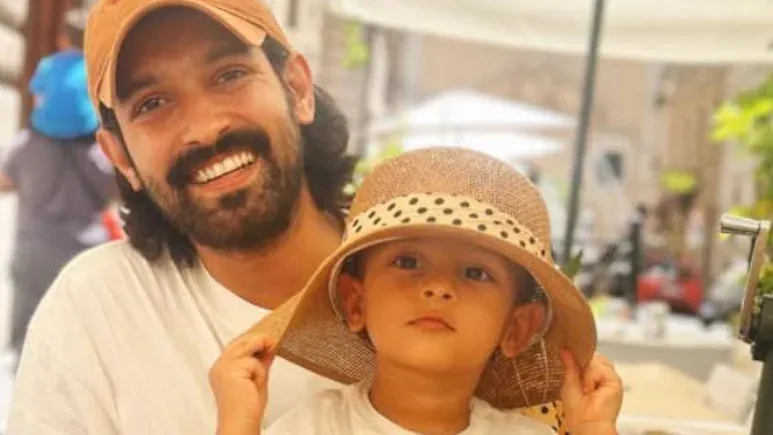
Bollywood actor Vikrant Massey, known for his thoughtful performances and quiet conviction, recently made headlines for a deeply personal decision—choosing to leave the religion column blank on his newborn son’s birth certificate. In a candid conversation on Rhea Chakraborty’s podcast, Massey explained that this choice reflects his broader belief in inclusivity, secularism, and the autonomy of personal faith. Drawing from his own family’s diverse religious background, he emphasized the importance of raising his child free from religious bias. The actor’s move has ignited a conversation around identity, tolerance, and the evolving definition of Indian parenthood.
A Personal Stand Against Religious Labeling
Massey's decision not to ascribe a religious identity to his son at birth is as much a reflection of his personal beliefs as it is a subtle form of social commentary. “When we received our son’s birth certificate, I simply placed a dash in the religion field,” he shared. Contrary to widespread assumptions, he clarified that Indian authorities do not mandate parents to declare a religion—this choice remains entirely voluntary.
By choosing to leave that space blank, Massey challenges societal norms that often impose religious affiliations on children before they can form independent beliefs. His action serves as a quiet protest against communal divisions and a hopeful gesture toward a more inclusive society.
A Family Rooted in Diversity
Massey’s decision did not arise in isolation—it stems from his lived experience within a family that defies religious uniformity. His father is a Christian, his mother a Sikh, and his brother embraced Islam as a teenager. His wife, Sheetal, belongs to a Rajput Thakur family. This unique familial mosaic has given him firsthand exposure to the shared values and spiritual richness that different faiths offer.
Rather than choosing one path over another, Massey embraces a pluralistic worldview. “I go to temples, gurdwaras, and dargahs. They all bring me peace,” he remarked, asserting that for him, religion is not about ritual but a way of life rooted in respect and connection.
Rejecting Labels, Embracing Humanity
For Massey, the heart of faith lies in compassion, not dogma. He openly expressed his desire to raise his son without religious prejudices. “I will be heartbroken if I ever find my child judging someone based on their religion or caste,” he said with conviction. His goal is to nurture empathy and open-mindedness over inherited beliefs or sectarian identities.
In an era where religious divisions are often weaponized in public discourse, Massey’s stance offers a counter-narrative—one that privileges character over creed and human dignity over inherited identities.
Religion as a Personal, Not Institutional, Experience
While Massey doesn't subscribe to organized religion, he is far from irreligious. “I believe deeply in God,” he noted, positioning himself within a spiritual framework that transcends institutional boundaries. His view reinforces the idea that spirituality is not confined to doctrine or denomination; it can be deeply personal, introspective, and inclusive.
He also disclosed that a namkaran (naming ceremony) was held for his son, underscoring that cultural rituals still hold value in his household, even as dogmatic labels do not.
A Cultural Shift in Parenting?
Massey's decision may signal a broader cultural shift among India’s urban, educated, and increasingly globalized younger parents. In prioritizing values over affiliations, such choices challenge traditional expectations and open new avenues for raising children with greater moral autonomy.
His approach aligns with a growing sentiment among modern Indian families that seeks to dismantle rigid social constructs—be it religion, caste, or gender roles—while still cherishing tradition in more meaningful, non-divisive ways.
Conclusion: A Quiet, Powerful Message
Vikrant Massey’s quiet refusal to label his son’s religion is more than a personal parenting choice—it is a resonant act of resistance against sectarian norms. Rooted in lived experience and guided by humanist values, his decision embodies a hopeful vision of India—one where empathy, respect, and individuality outweigh inherited divisions. In a country grappling with the complexities of faith and identity, Massey’s message is clear: raising a child to be kind is far more important than raising one to belong.
Comments