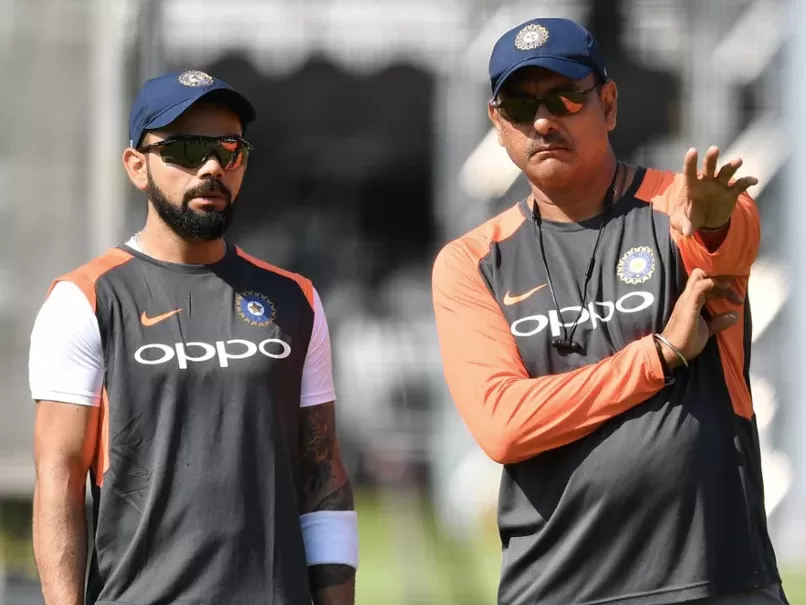
The unexpected retirement of Virat Kohli from Test cricket continues to echo through the Indian cricketing community. Former head coach Ravi Shastri has voiced disappointment over how the decision was handled, suggesting that the transition lacked proper communication and failed to honor Kohli’s immense contributions. Shastri also stated that, had he been in charge, he would have reinstated Kohli as Test captain following India's series loss to Australia. As India prepares to face England under new captain Shubman Gill, Kohli’s absence and Shastri’s critique have reignited discussions on leadership, legacy, and succession planning in Indian cricket.
Kohli’s Retirement: A Sudden Exit Without Closure
Virat Kohli’s abrupt decision to retire from Test cricket last month, just ahead of the squad announcement for the England series, stunned fans and insiders alike. With 123 Test matches, 9,230 runs, 30 centuries, and an average of 46.85, his departure leaves a void not just in the Indian batting lineup, but in the psychological backbone of the team.
Ravi Shastri, India’s head coach during Kohli’s most impactful years, said in a video released by SonyLiv that the retirement lacked the grace and closure an athlete of Kohli’s stature deserves. “It could have been handled better. There should have been more communication,” Shastri emphasized, adding that the farewell did not match the legacy Kohli leaves behind.
A Captaincy Void and a Missed Opportunity
Kohli’s leadership helped shape one of India’s most competitive Test teams, especially in overseas conditions. His tenure saw historic victories in Australia and significant resilience against top-tier sides. Shastri believes the Indian management missed a crucial opportunity by not reinstating Kohli as captain after India’s 1-3 defeat in the recent Australia series.
“If I had anything to do with it, I would have made him captain straightaway after Australia,” Shastri declared, indicating that Kohli’s leadership qualities still held immense value, especially in the red-ball format. His statement points to a broader concern about succession planning and the abrupt transition in leadership roles.
A New Era Under Shubman Gill
Following the exits of both Kohli and Rohit Sharma from the Test format, India has handed the reins to 24-year-old Shubman Gill, positioning him as the youngest Test captain in recent history. Gill will lead a dynamic but relatively inexperienced squad against England in a five-match Test series starting June 20 in Leeds.
The Indian squad includes a blend of established names like Ravindra Jadeja and Jasprit Bumrah, alongside younger talents such as Nitish Reddy and Sai Sudharsan. Rishabh Pant will serve as vice-captain, marking his return to leadership duties following a period of injury rehabilitation.
India’s Test Squad:
Shubman Gill (c), Rishabh Pant (vc), Yashasvi Jaiswal, KL Rahul, Sai Sudharsan, Abhimanyu Easwaran, Karun Nair, Nitish Reddy, Ravindra Jadeja, Dhruv Jurel, Washington Sundar, Shardul Thakur, Jasprit Bumrah, Mohammed Siraj, Prasidh Krishna, Akash Deep, Arshdeep Singh, Kuldeep Yadav.
England’s Counterattack
England has announced a formidable lineup for the first Test, led by Ben Stokes. The squad features experienced campaigners such as Joe Root and Ollie Pope, alongside emerging names like Shoaib Bashir and Jacob Bethell. With players like Jamie Overton and Chris Woakes forming the pace backbone, England will look to exploit home conditions and strike early in the series.
England’s First Test Squad:
Ben Stokes (c), Joe Root, Ollie Pope, Harry Brook, Zak Crawley, Ben Duckett, Jamie Smith (wk), Shoaib Bashir, Jacob Bethell, Brydon Carse, Sam Cook, Josh Tongue, Jamie Overton, Chris Woakes.
Analysis: Legacy Versus Leadership Transition
Virat Kohli’s retirement, while a personal decision, has underscored a deeper issue in Indian cricket: the management of transitions and the honoring of player legacies. Shastri’s remarks hint at a leadership vacuum and suggest that the current cricketing establishment may have mishandled both the communication and the emotional resonance of Kohli’s departure.
Simultaneously, the appointment of Shubman Gill marks a strategic shift towards building a younger core, but it comes with inherent risks. Test cricket demands resilience and temperament—qualities that take time to mature. How Gill balances expectations while shaping his own legacy will be a defining storyline of this new era.
Final Thoughts
Virat Kohli’s exit from Test cricket has not only ended a remarkable chapter but also raised critical questions about leadership dynamics within Indian cricket. While the game moves forward with new faces and fresh ambitions, the manner in which cricketing legends are transitioned out of national duties remains an area demanding reflection and reform. As India embarks on its England tour, eyes will be equally focused on the field and on the decisions shaping its future off it.
Comments