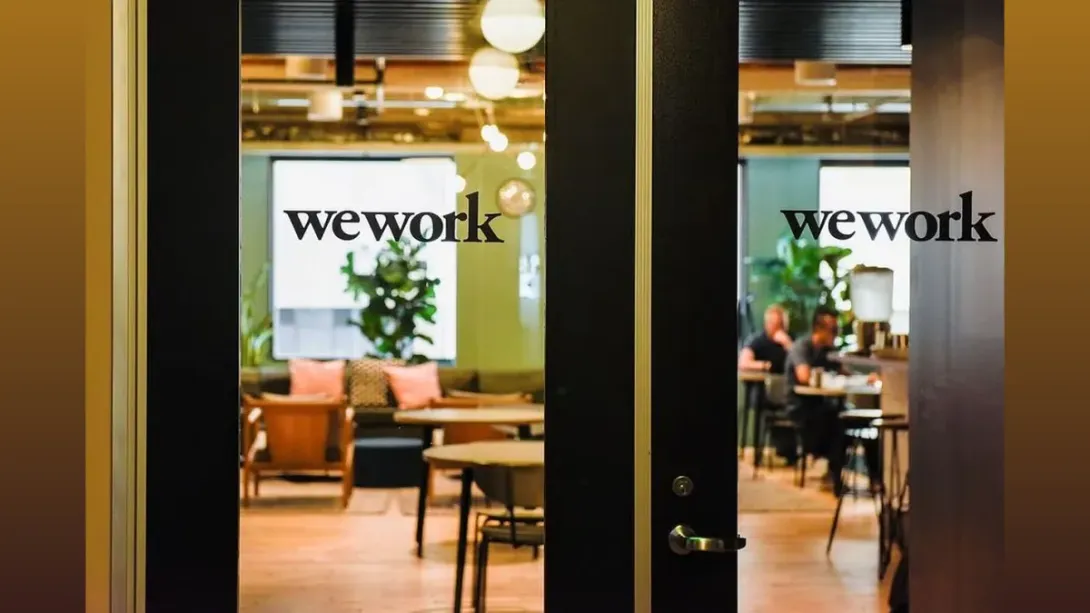
Flexible workspace provider WeWork India reported a steep decline in profit for the second quarter of FY2025, reflecting the impact of rising operational costs, subdued enterprise demand, and a challenging commercial real estate environment. While revenue continued to grow on the back of steady occupancy levels and client renewals, profit margins narrowed sharply due to higher rentals, employee expenses, and maintenance costs. The company maintained that its long-term fundamentals remain intact, supported by expansion into Tier-2 cities and a diversified corporate client base, even as the broader co-working industry grapples with margin pressures and global market uncertainties.
Earnings Overview: Profit Drops Despite Revenue Growth
WeWork India’s second-quarter profit recorded a significant year-on-year decline, marking one of the sharpest drops since the company turned profitable in FY2023. Although exact figures were not disclosed, industry sources suggest that net profit fell by over 40%, driven primarily by a spike in operating expenditures and delayed payments from a few enterprise clients.
Revenue for the quarter, however, remained marginally higher compared to the same period last year, supported by sustained occupancy levels above 80% and continued traction in flexible office solutions. The company’s hybrid workspace offerings, tailored to corporate clients adapting to post-pandemic work models, continued to attract steady demand.
Despite the earnings setback, management reaffirmed confidence in the company’s growth trajectory, citing upcoming projects in emerging business corridors and plans to expand capacity by the end of the fiscal year.
Rising Costs and Operational Pressures
WeWork India’s Q2 performance was weighed down by increased rental and facility management costs, particularly in premium locations such as Bengaluru, Mumbai, and Gurugram. The surge in electricity tariffs, building maintenance charges, and property taxes further squeezed margins.
Additionally, staffing and marketing expenses rose sharply as the company invested in expanding its workforce and enhancing brand visibility to capture a larger share of the domestic flexible workspace market. Industry analysts note that these cost pressures have become widespread across the sector, as co-working operators strive to balance expansion with profitability amid competitive pricing.
In response, WeWork India has begun renegotiating lease terms with landlords and optimizing underperforming centers to protect cash flow. The company is also investing in automation and energy-efficient infrastructure to reduce overhead costs in the medium term.
Sector Dynamics: Hybrid Work and Competitive Landscape
India’s flexible workspace market has evolved rapidly in the past three years, fueled by the hybrid work revolution and a surge in demand from global capability centers (GCCs), startups, and small enterprises. However, competition has intensified as domestic players such as Awfis, Smartworks, and 91Springboard aggressively expand into new territories with competitive pricing and localized solutions.
According to industry reports, India’s co-working segment is expected to grow at a compound annual rate of 15–20%, reaching nearly 100 million sq. ft. by 2030. However, rising real estate costs and high capital expenditure continue to pose challenges for operators seeking to maintain profitability while scaling operations.
WeWork India, despite its temporary earnings decline, continues to hold a strong market share of around 20%, making it one of the leading players in the segment. The company’s focus on enterprise clients and customized workspace solutions has helped stabilize revenue streams even during periods of macroeconomic volatility.
Strategic Focus: Expansion and Diversification
WeWork India remains committed to its long-term expansion strategy, with new centers planned across Pune, Chennai, and Hyderabad in the coming quarters. The company is also targeting Tier-2 cities such as Ahmedabad, Chandigarh, and Kochi, where flexible work models are gaining traction among local enterprises and remote teams.
In addition, the firm is exploring strategic partnerships with real estate developers to create asset-light models that reduce leasing risks while maintaining operational control. This approach mirrors global trends in the co-working industry, where operators are increasingly shifting toward management contracts instead of traditional leasing arrangements.
The company is also prioritizing sustainability and digital innovation, including the integration of AI-driven analytics to optimize space utilization, energy consumption, and customer experience.
Management Outlook and Investor Confidence
Commenting on the quarterly performance, WeWork India’s management emphasized that the profit decline is “temporary and transitional,” attributing it to short-term cost escalations and timing mismatches in lease renewals. They expressed optimism that profitability would recover in the second half of the fiscal year as new centers become operational and occupancy rates improve.
Analysts share a cautiously optimistic view, noting that while the company faces near-term headwinds, its strong brand equity, diversified client portfolio, and scalable operating model continue to provide a competitive edge. The trust built with enterprise clients—who account for over 60% of its revenue base—remains a key stabilizing factor.
Conclusion: Navigating a Period of Adjustment
WeWork India’s sharp Q2 profit decline underscores the delicate balance between growth and profitability that defines India’s fast-evolving co-working industry. As the company expands its footprint and strengthens its financial structure, it will need to navigate cost pressures, competitive intensity, and changing workspace preferences with strategic precision.
Despite short-term turbulence, the broader fundamentals of India’s flexible workspace sector remain robust—driven by hybrid work models, digital transformation, and a maturing corporate mindset. With disciplined execution and continued focus on operational efficiency, WeWork India could well reclaim its profitability momentum in the quarters ahead, reaffirming its leadership in the country’s modern office ecosystem.
Comments