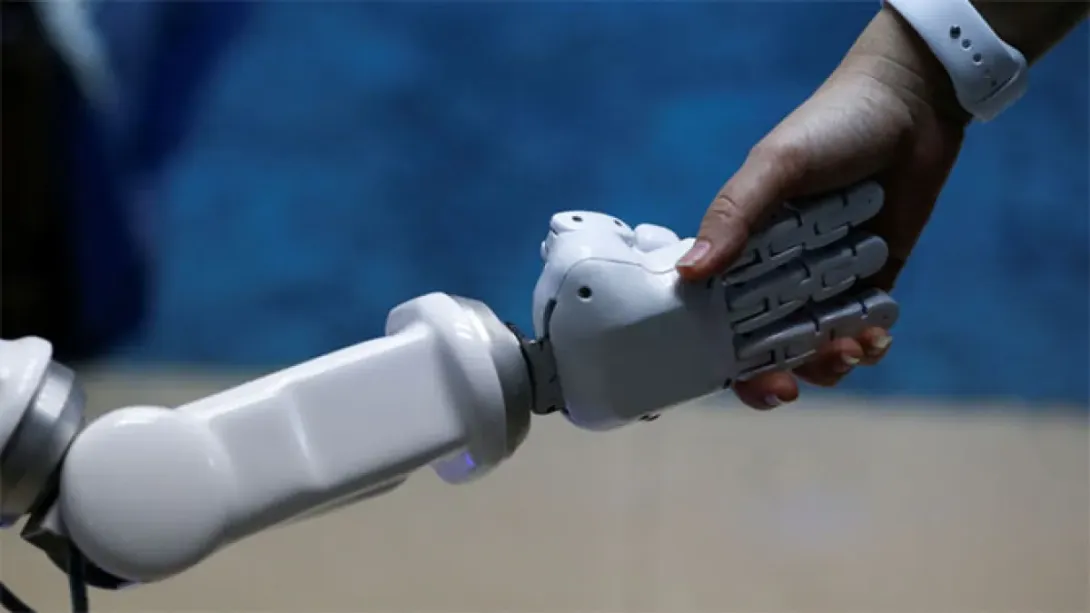
Artificial intelligence is rapidly converging with biological intelligence to reshape modern healthcare, ushering in a new era of precision medicine, faster diagnostics and more efficient care delivery. From machine-learning algorithms that detect disease earlier than clinicians to bio-inspired systems that mimic human cognition, this fusion is transforming how medicine is practiced and scaled. As investment accelerates and regulators adapt, hospitals, researchers and policymakers face a dual challenge: harnessing AI’s analytical power while preserving the ethical, human-centered foundations of care. The result is a healthcare ecosystem that is more predictive, personalized and data-driven than ever before.
The Convergence of Machine Logic and Human Biology
The integration of artificial intelligence with biological intelligence marks one of the most consequential shifts in healthcare since the advent of modern pharmaceuticals. AI systems excel at processing vast datasets—genomic sequences, medical images and electronic health records—at speeds no human can match. Biological intelligence, by contrast, brings contextual judgment, empathy and experiential reasoning. Together, they form a hybrid model in which machines augment, rather than replace, clinical expertise.
This convergence is already visible in diagnostics, where algorithms identify subtle patterns in radiology scans and pathology slides. Clinicians, informed by these insights, can make faster and more accurate decisions, reducing diagnostic errors and improving patient outcomes.
Precision Medicine and Predictive Care
AI-driven analytics are accelerating the shift from reactive treatment to predictive and preventive care. By combining biological markers with real-time patient data, healthcare providers can anticipate disease progression and tailor interventions accordingly. Genomic analysis powered by AI enables therapies designed for individual patients rather than population averages, a cornerstone of precision medicine.
Technology leaders such as OpenAI and DeepMind are advancing models that can interpret complex biological data, while established players like IBM Watson Health focus on clinical decision support. These tools promise not only better outcomes but also more efficient use of healthcare resources.
Economic Impact and Investment Momentum
The financial implications of AI-biological integration are substantial. Global healthcare systems are allocating billions to digital transformation, with emerging markets following suit. In India, for example, public and private investment in health technology has surged, with funding commitments running into several thousand crores of rupees (Rs.), reflecting confidence in AI-enabled care models.
Cost efficiencies are a central driver. Automated triage, optimized hospital workflows and AI-assisted drug discovery can significantly reduce operational expenses while expanding access to care, particularly in underserved regions.
Ethics, Regulation and Human Oversight
As AI becomes more deeply embedded in healthcare, ethical and regulatory scrutiny is intensifying. Questions around data privacy, algorithmic bias and accountability remain unresolved. Regulators such as the World Health Organization and the U.S. Food and Drug Administration are developing frameworks to ensure safety and transparency without stifling innovation.
Crucially, experts emphasize that AI must remain a clinical aid, not an autonomous authority. Human oversight is essential to interpret results, address anomalies and maintain trust between patients and providers.
The Road Ahead
The marriage of AI and biological intelligence is not a distant vision; it is an unfolding reality. As algorithms grow more sophisticated and biological data more accessible, healthcare will become increasingly personalized, predictive and proactive. The challenge for the industry lies in balancing technological ambition with ethical responsibility. If managed wisely, this convergence could redefine healthcare as a system that is not only smarter, but more humane.
Comments