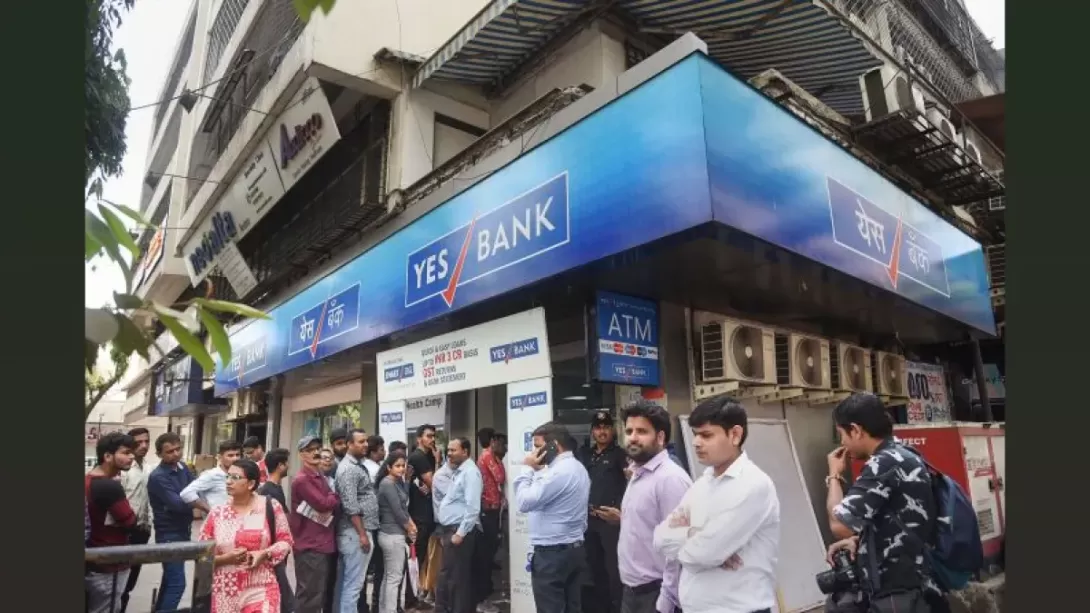
Yes Bank shares jumped sharply on Monday after a game-changing announcement: State Bank of India (SBI) and seven other Indian lenders are offloading a collective 20% stake in the bank to Japan’s Sumitomo Mitsui Banking Corporation (SMBC) for Rs 13,483 crore. The deal positions SMBC as the largest single shareholder in Yes Bank, marking the biggest foreign investment in India’s banking sector to date. This strategic move not only enhances investor confidence in Yes Bank’s long-term prospects but also signals growing global interest in India’s private banking ecosystem amid broader financial reforms.
SMBC’s Entry Reshapes Yes Bank’s Shareholding Structure
In a landmark cross-border transaction, Sumitomo Mitsui Banking Corporation (SMBC) has agreed to acquire a 20% stake in Mumbai-based Yes Bank for Rs 13,483 crore. This move, which marks the largest-ever foreign direct investment in India’s private banking industry, is set to fundamentally reshape the ownership structure of the once-distressed lender.
Of the 20% stake being transferred, State Bank of India is divesting a 13.19% holding—amounting to 413.44 crore shares—for Rs 8,888.97 crore. The remaining 6.81% stake is being sold collectively by Axis Bank, Bandhan Bank, Federal Bank, HDFC Bank, ICICI Bank, IDFC First Bank, and Kotak Mahindra Bank for approximately Rs 4,594 crore.
Once the transaction is finalized, SMBC will become the single largest shareholder in Yes Bank, ushering in a new chapter for the institution, which has undergone significant restructuring since its near-collapse in 2020.
Market Responds with Optimism
Yes Bank’s stock reacted positively to the announcement, surging 8.7% on the BSE to close at Rs 21.74, while gaining 8.39% on the NSE to Rs 21.70. The bullish sentiment pushed the bank’s market capitalization up by Rs 1,415.15 crore, bringing its total valuation to Rs 64,123.38 crore.
This upward momentum reflects renewed investor confidence, driven by the credibility and strategic strength that SMBC brings to the table. The Japanese banking giant’s decision to take a significant stake in Yes Bank suggests long-term confidence in both the bank’s recovery path and the broader Indian financial system.
A Post-Reconstruction Turning Point
This transaction stems from the aftermath of the YES Bank Reconstruction Scheme implemented in March 2020, when SBI and several other lenders infused capital to stabilize the failing private sector bank. At the time, these institutions collectively stepped in to restore solvency and public trust.
Now, with Yes Bank on firmer footing, these early investors are partially exiting, monetizing their holdings while bringing in a globally respected financial institution. The move validates the effectiveness of the restructuring initiative and signals a new era of strategic alignment for the bank.
Strategic Implications and Future Outlook
The strategic entry of SMBC into the Indian private banking space carries far-reaching implications. For Yes Bank, it means enhanced access to global capital, technology, and risk management expertise. It also signals to the market that the bank is moving beyond its recovery phase and preparing for sustainable growth.
For SMBC, the investment offers a direct entry point into one of the world’s fastest-growing banking markets. India’s large, underbanked population and digitization drive present significant upside potential for global financial institutions with long-term vision.
Additionally, this transaction could pave the way for more such global capital flows into India’s financial sector, especially as the government continues to emphasize reforms, privatization, and ease of doing business.
Conclusion
Yes Bank’s latest strategic development marks a critical inflection point not only for the institution itself but also for India’s banking sector at large. With Sumitomo Mitsui Banking Corporation poised to take the reins as the largest shareholder, the bank is well-positioned to scale operations, enhance governance, and reestablish its credentials in a competitive market. The transaction reinforces investor optimism and may set a precedent for future international investments in India's growing financial ecosystem.
Comments