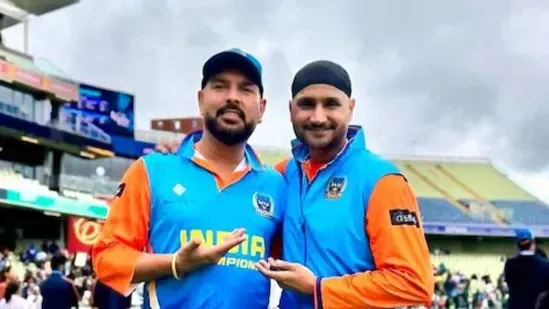
Yuvraj Singh, one of India’s most celebrated cricketing icons, has found himself at the center of a heated controversy after announcing his withdrawal from the World Championship of Legends (WCL). While his exit was intended as a gesture of solidarity, critics have lambasted the move as inconsistent and performative. The backlash intensified on social media, with many accusing the cricketer and his peers of applying double standards—questioning why they continued casual associations with those they now publicly distance themselves from. The incident has sparked a wider debate around celebrity responsibility and the optics of public stances.
---
The Controversy Unfolds
The decision by Yuvraj Singh and a few other senior players to withdraw from the WCL was framed as a principled response to alleged controversies surrounding the league’s management or affiliations. While the full details of the internal dispute have not been officially disclosed, the public narrative painted the move as an act of moral conviction.
However, that moral stance was quickly called into question. Social media erupted with criticism, accusing Yuvraj and others of selective ethics. Visuals and videos circulated online showing these players socializing with the very individuals they were seemingly trying to dissociate from in the professional realm. This glaring contradiction has fueled accusations of hypocrisy and eroded the credibility of their gesture.
---
Public Reaction: Solidarity or Spectacle?
What may have started as a carefully curated stand against impropriety has evolved into a spectacle marked by confusion and criticism. Fans, former players, and commentators have weighed in with divided opinions. Some have lauded the players for taking a difficult stand in the face of controversy, while others argue that it rings hollow in light of their private associations.
Critics have taken particular issue with what they describe as a manufactured crisis. If the players were genuinely uncomfortable with the individuals or values represented in the WCL, why continue social interactions and leisure travel with them? This question has been echoed across platforms, leading many to view the pullout as more optics than substance.
---
A Question of Celebrity Accountability
The episode reignites an ongoing conversation in Indian sport and entertainment circles: How much responsibility do public figures bear for consistency between their public messaging and private behavior?
Yuvraj Singh, who has enjoyed enormous goodwill throughout his career—both for his cricketing achievements and his comeback from cancer—now faces a rare moment of public disillusionment. The dissonance between his public statements and private actions is being scrutinized not only as a matter of personal integrity but also as a reflection of broader celebrity culture.
The expectation is not perfection but coherence. When influential figures leverage their stature to make bold public exits, they must ensure their personal conduct does not betray the principles they claim to uphold.
---
The Bigger Picture: Performance or Principle?
The WCL controversy is not merely about one player's decision—it represents a deeper issue in how modern sports and media ecosystems function. In an era where gestures are instantly amplified and scrutinized, the line between authenticity and performance is razor-thin.
The optics of protest have become as important as the act itself. For Yuvraj Singh and his contemporaries, this incident serves as a cautionary tale on the cost of misaligned narratives. Authenticity, especially in the age of social media, is not just about making the right moves—it’s about consistency in values, both seen and unseen.
---
Conclusion
While the WCL withdrawal might have been intended as a symbolic act of defiance or moral clarity, its execution has sparked more controversy than credibility. As public figures continue to navigate complex personal and professional terrains, this episode underscores the importance of alignment between intention and action. For Yuvraj Singh and others caught in the storm, the real challenge may lie not in managing public perception, but in restoring the trust that made their voices matter in the first place.
Comments