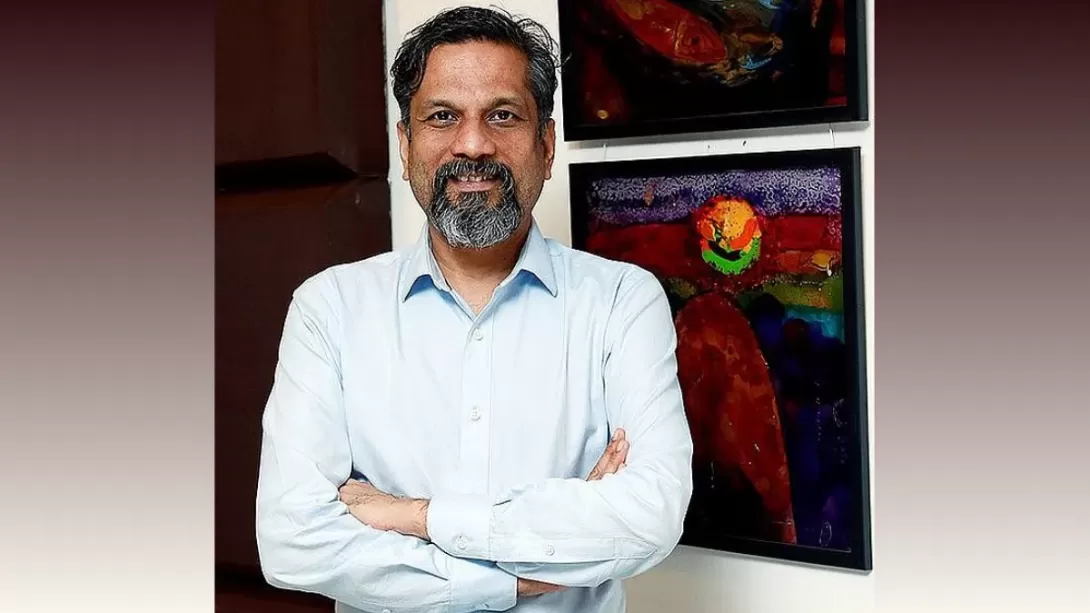
India's software and IT services industry stands at a critical crossroads, facing what Sridhar Vembu, co-founder of Zoho Corporation, describes as a structural upheaval rather than a mere cyclical downturn. In a thought-provoking commentary, Vembu cautions that decades of inefficiencies, compounded by global economic pressures and technological disruption from AI, have placed the sector in a precarious position. As traditional business models face obsolescence, particularly those reliant on scale and labor arbitrage, India’s tech ecosystem must confront deep-rooted vulnerabilities and reimagine its trajectory for the decades ahead.
A Foundational Shift, Not a Passing Storm
In a landscape often dominated by optimism over technological innovation, Sridhar Vembu’s sobering assessment arrives as a stark counterpoint. According to the Zoho co-founder, the turbulence currently rippling through the global software industry is not merely a reflection of artificial intelligence or economic cycles, but rather a long-overdue structural correction. Writing on the social platform X, Vembu argued that inefficiencies in software products and services—entrenched over decades—are beginning to unravel the economic logic that has underpinned the industry's growth.
This, he notes, is not an outcome of recent developments such as trade tariffs or automation alone. “Even without the uncertainty induced by tariffs, there was trouble ahead,” Vembu stated, alluding to systemic inefficiencies that have been obscured by years of unchecked growth and asset inflation.
India’s Dependency on an Unsustainable Model
For India, the implications are particularly acute. As one of the world’s leading exporters of software and IT services, the country has thrived on a model that heavily depends on scale, low-cost labor, and predictable service exports. However, Vembu warns that this model may no longer be viable in the face of automation and evolving global demands.
“Sadly, we adapted to a lot of those inefficiencies in India,” he observed. “Our jobs came to depend on them. The IT industry sucked in talent that may have gone into manufacturing or infrastructure.” His critique underscores a broader concern: that the dominance of software services in India may have inadvertently stifled development in other critical sectors such as manufacturing and infrastructure.
The warning is especially timely as newer economies diversify rapidly and invest in domestic innovation and production capabilities, leaving India’s tech-heavy economy exposed to structural vulnerabilities.
Artificial Intelligence: A Catalyst for Disruption
The rise of artificial intelligence has often been touted as a transformative force, promising unprecedented efficiency and innovation. However, for traditional IT service firms—particularly those in outsourcing-heavy regions—AI represents an existential threat.
Analysts suggest that AI-enabled software development could dramatically reduce the need for large engineering teams, challenging India’s labor-centric IT export model. Smaller, highly efficient teams equipped with AI tools could accomplish tasks that once required hundreds of engineers, potentially displacing large swaths of the workforce and compressing margins for service providers.
This trend is not hypothetical—it is already manifesting in early-stage productivity gains observed across several global software firms experimenting with AI-driven workflows.
The End of an Era: Rethinking the Future
Vembu’s core argument hinges on the belief that the software industry’s past three decades—characterized by explosive growth and rising valuations—cannot be relied upon as a blueprint for the future. “We are only in the early stages of a long reckoning,” he warned. “The last 30 years are not a good guidepost to the next 30 years.”
The industry, he insists, must undergo a fundamental re-evaluation. This includes reassessing assumptions around growth, talent deployment, product value, and business scalability. Leaders are urged to embrace a long-term vision rooted in technological authenticity, resilience, and adaptability—rather than legacy metrics or investor expectations.
Vembu’s own decision to step back from his CEO duties to focus on research and development underscores his belief in innovation as a strategic imperative, not a corporate talking point.
Stock Market Outlook: Zoho's Position in a Volatile Climate
Zoho, though privately held and not listed on the stock market, is often seen as a bellwether for India’s homegrown tech potential. Its performance and leadership have been scrutinized for clues about broader industry trends. While Zoho maintains robust financial health, with revenue figures reportedly exceeding Rs. 8,000 crore in FY24, the sector-wide malaise poses questions about sustainability.
Major Indian IT firms such as Infosys, Wipro, and TCS have reported sluggish growth and cautious client spending in recent quarters. Stock market sentiment reflects this uncertainty, with the Nifty IT index witnessing heightened volatility amid weak earnings and downgrades. Investors are increasingly pricing in the long-term effects of automation and margin compression.
As companies pivot from traditional service contracts to AI-enhanced platforms, firms like Zoho—known for product-first strategies—could stand to gain. However, even product companies are not immune to the broader industry realignment that Vembu has described.
Conclusion: Time to Reimagine India’s Tech Narrative
Sridhar Vembu’s remarks serve as a clarion call to policymakers, investors, and technologists alike: the Indian IT sector must confront its foundational challenges with courage and clarity. Rather than treating current disruptions as temporary, the industry must embrace reinvention as a necessity. Whether through deeper investment in R&D, nurturing cross-sector talent, or rebalancing the economy toward manufacturing and infrastructure, the time for incrementalism is over.
India’s next phase of growth will not come from preserving the status quo but from bold decisions that prepare it for a vastly different future—one defined not by scale alone, but by adaptability, innovation, and resilience.
Comments