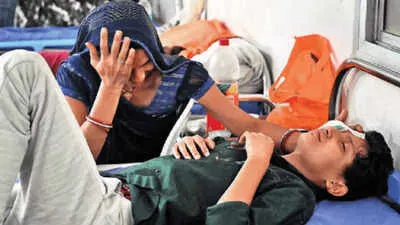
A horrifying incident in Madhya Pradesh has turned the festive spirit of Diwali into a nightmare as over 300 people sustained eye injuries and at least 23 are feared to lose their vision after using carbide-based guns during celebrations. These improvised devices, often used to create loud blasts in lieu of firecrackers, exploded unexpectedly, causing severe facial and ocular damage. Hospitals across several districts, including Indore and Ujjain, are overwhelmed with patients seeking emergency treatment. Authorities have launched investigations and issued warnings against the use of hazardous explosive materials, as the tragedy exposes the growing risks of unsafe celebratory practices.
A Festival Marred by Misfortune
Diwali, the festival of lights that symbolizes joy and renewal, descended into chaos in parts of Madhya Pradesh this year. What began as spirited celebration quickly transformed into tragedy when hundreds of revelers suffered serious injuries from carbide explosions. The victims, largely young men, had used carbide guns—locally fabricated devices that produce loud booms through chemical reactions—to mimic firecracker effects.
Within minutes, hospitals in Indore, Ujjain, and nearby districts were inundated with patients suffering from burns, lacerations, and severe eye trauma. Medical authorities have confirmed that at least 23 individuals face the possibility of permanent vision loss, while over 300 others are undergoing treatment for varying degrees of injury.
Carbide Guns: The Dangerous Substitute
Carbide guns, though illegal for recreational use, have become increasingly common during festivals in rural and semi-urban India. They operate on the reaction between calcium carbide and water, producing acetylene gas that combusts explosively when ignited. While many use these devices to produce sound effects similar to fireworks, improper handling or overloading of the reaction chamber can lead to catastrophic explosions.
Experts warn that these makeshift devices are highly unpredictable and lack any form of safety control. The chemical reaction generates intense pressure and heat, often causing the gun’s metal chamber to burst. Victims typically sustain facial burns and corneal injuries due to their proximity to the blast.
A senior ophthalmologist at a government hospital in Indore described the injuries as “severe and complex,” noting that many patients arrived with ruptured eyeballs and chemical burns that may require multiple surgeries or corneal transplants.
Government and Administrative Response
In response to the tragedy, the Madhya Pradesh government has ordered a comprehensive probe and directed local administrations to seize remaining carbide devices from markets and households. Police have initiated legal action against those manufacturing or selling such contraptions, warning that strict penalties will follow under the Explosives Act.
Chief Minister Mohan Yadav expressed deep sorrow over the incident, assuring that the government would provide medical assistance and compensation to affected families. “No celebration should come at the cost of human life,” he said, emphasizing the need for awareness about safe festive practices.
Disaster management teams have also been deployed to conduct safety drives in vulnerable areas, educating citizens about the dangers of using unauthorized pyrotechnic materials.
The Growing Menace of Unregulated Fireworks
The incident highlights a broader public safety issue—India’s inadequate regulation and enforcement of firework substitutes and homemade explosive devices. Despite repeated warnings from authorities, the use of banned or unregulated materials continues to rise, particularly in smaller towns where commercial firecrackers are expensive or restricted.
Environmental experts also point out that carbide-based explosions release toxic gases that contribute to air and noise pollution, further aggravating health concerns during the festive season. Combined with lax enforcement and limited public awareness, such practices represent a ticking hazard waiting to explode—literally.
Medical and Social Consequences
Doctors warn that beyond the immediate physical trauma, many victims may face long-term psychological and financial repercussions. Eye injuries can permanently alter livelihoods, especially for daily-wage workers, artisans, and farmers who rely heavily on visual precision.
Non-governmental organizations have stepped in to support the victims’ families by arranging medical supplies and rehabilitation assistance. Ophthalmic associations across India are also calling for a nationwide awareness campaign highlighting the dangers of chemical-based celebratory devices.
“This incident is not just a health emergency—it is a wake-up call,” said a senior public health expert. “We must balance celebration with caution and reform how festivals are celebrated in both urban and rural India.”
Looking Forward: Lessons in Prevention
As investigations continue, authorities are under pressure to ensure accountability while preventing future tragedies. Experts have suggested stricter monitoring of chemical sales, community-level education campaigns, and robust enforcement of existing safety laws.
Diwali’s spirit of illumination must not be overshadowed by preventable suffering. The Madhya Pradesh disaster stands as a grim reminder that modernization must be matched with responsibility. Safety awareness, scientific understanding, and civic vigilance must become integral to festive celebrations—ensuring that the festival of lights never again turns into a festival of loss.
Comments