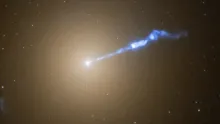
Astronomers studying the giant elliptical galaxy Messier 87, or M87, have reported fresh insights that further refine understanding of extreme cosmic environments. Best known for hosting the first black hole ever directly imaged, M87 continues to serve as a natural laboratory for testing theories of gravity, high-energy physics and galaxy evolution. Recent observations, combining data from space- and ground-based telescopes, have shed new light on the galaxy’s relativistic jet, stellar dynamics and the behavior of matter near its supermassive black hole.